
Sierra Greenhouse Insights
How To Secure A Greenhouse From Wind Effectively
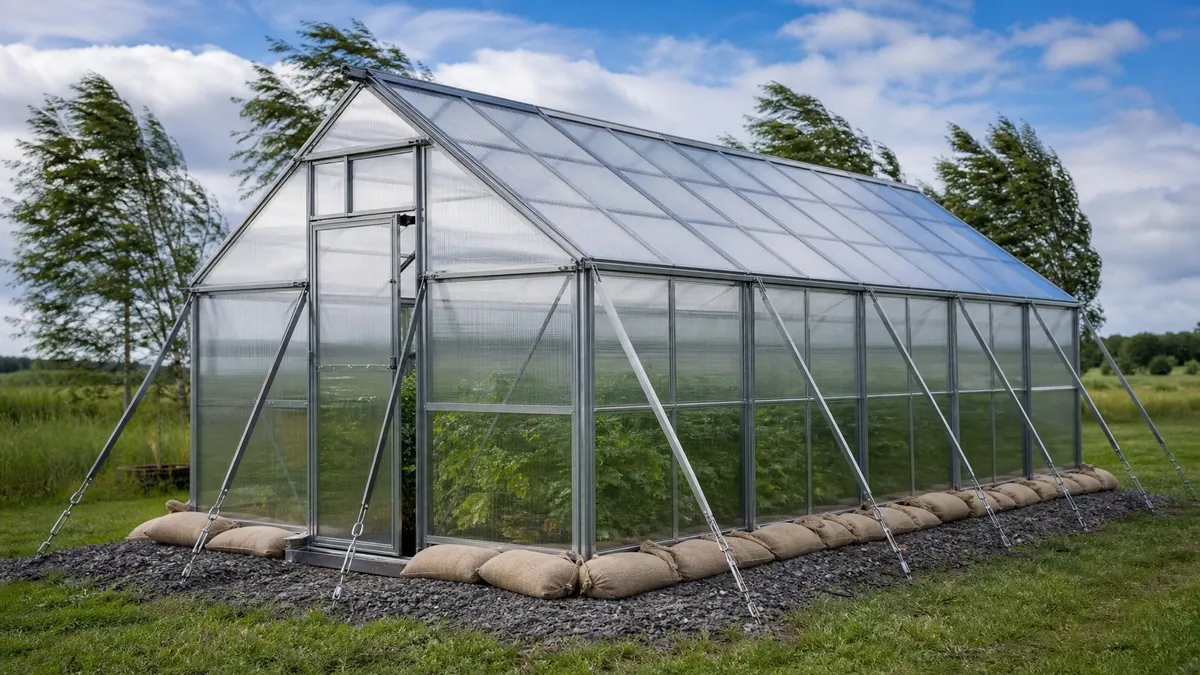
A single strong gust can undo months of careful work in seconds. Whether you’re running a small hobby greenhouse or something big enough to feed your family, wind is a real threat to both structure and plants.
Learning how to secure a greenhouse from wind isn’t really optional if you live anywhere with storms, steady breezes, or wild weather swings.
The key to a wind-resistant greenhouse comes down to five things: proper site selection, a solid anchoring system, a reinforced frame, secure glazing, and regular maintenance. Miss any of those and you’re basically tempting fate—uplift, panel blowouts, or worse.
This guide walks you through the exact steps to beef up your greenhouse security, whether you're building a new one or trying to save an existing structure from the next big storm.
Key Takeaways
- Site selection is your first line of defense; use natural windbreaks and avoid "wind tunnels."
- Anchoring is about managing uplift; a standard base rail isn't enough in high-wind zones.
- Most structural failures start at the doors and vents—keep them latched and reinforced.
- Polycarbonate panels and plastic films need specific fastening techniques to prevent blowouts.
Site Selection and Initial Ground Prep
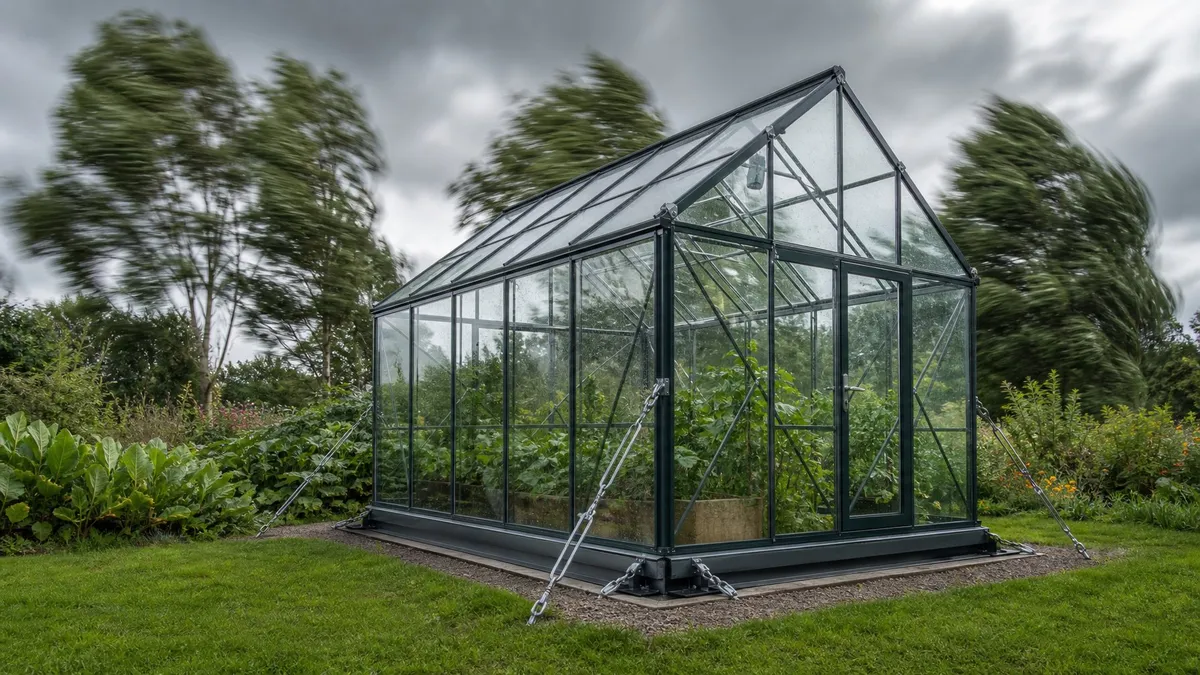
Before you ever drive a stake into the ground, your location choice determines about 50% of your wind risk.
Finding Natural Windbreaks on Your Property
Look for existing structures, dense hedges, or tree lines that can act as a shield. Ideally, you want your greenhouse on the leeward side of these barriers.
However, don't put it too close. A good rule of thumb is to stay back a distance equal to twice the height of the windbreak to avoid nasty downward turbulence.
Orientation Relative To Prevailing Winds
Know which way the wind usually blows in your area. You want to orient your greenhouse so the narrowest part (the gable end) faces the prevailing wind. This presents the smallest possible surface area for the wind to push against.
Avoid placing the long side of the greenhouse perpendicular to the wind, as this creates a massive "sail" effect that can easily topple or lift the entire structure.
Grading and Leveling for a Solid Foundation
A greenhouse built on uneven ground has gaps at the base where wind can enter. Once wind gets under or inside the structure, the internal pressure can literally explode the panels outward.
Ensure your site is perfectly level and that the foundation makes full contact with the ground. Using a solid foundation guide can help you pick the right base for your soil type.
Mastering Greenhouse Anchoring Systems
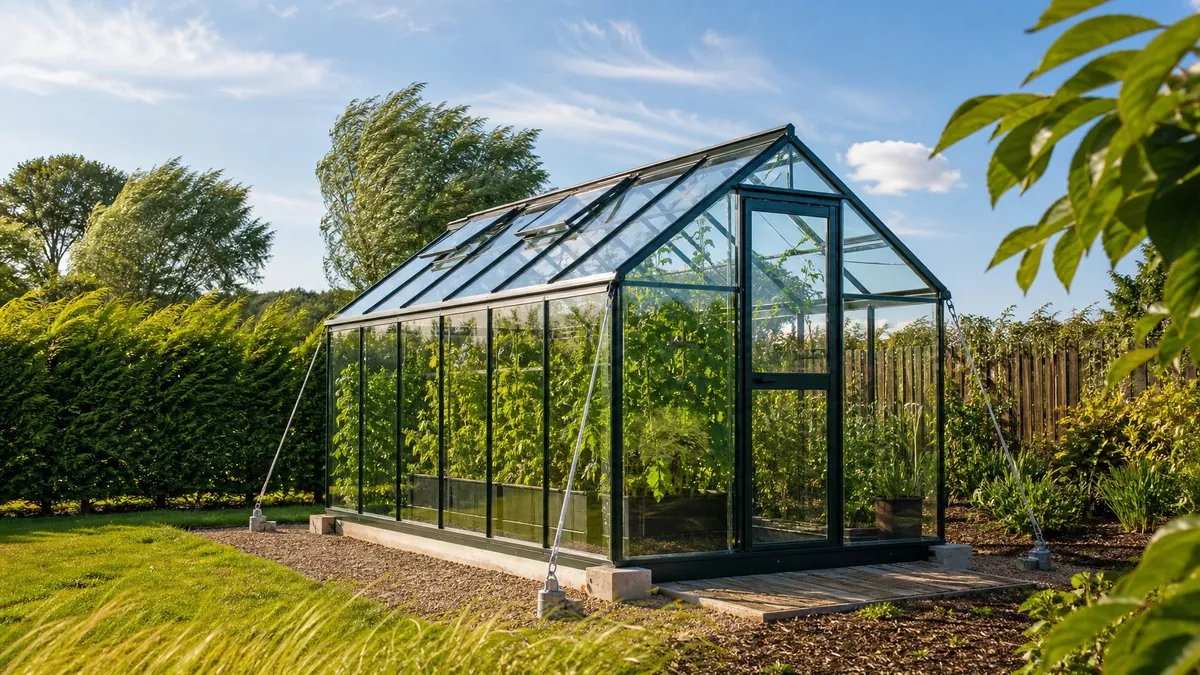
Anchoring is all about countering "uplift"—the force that tries to suck your greenhouse into the air.
Auger Anchors for Soil and Grass
If you're on soil, auger (screw-in) anchors are the gold standard. They should be at least 18 to 30 inches long. Screw them into the ground at each corner and at least every 6 feet along the long walls. Use galvanized steel cable or heavy-duty straps to secure the greenhouse frame directly to these anchors.
Concrete Footings and Slab Bolting
For the most secure setup, bolt your greenhouse to a concrete slab or deep concrete footings.
- Expansion Bolts: Use these for existing concrete.
- J-Bolts: These are set into the wet concrete when you pour it.
Make sure the bolts go through the main structural frame, not just a thin base trim.
Weighting Down Portable and Pop-up Units
For portable greenhouses, anchors might not be an option. In this case, use heavy weights. Sandbags, concrete blocks, or specialized weighted "feet" can work. Aim for at least 50–100 lbs of weight per corner.
Structural Reinforcement Techniques
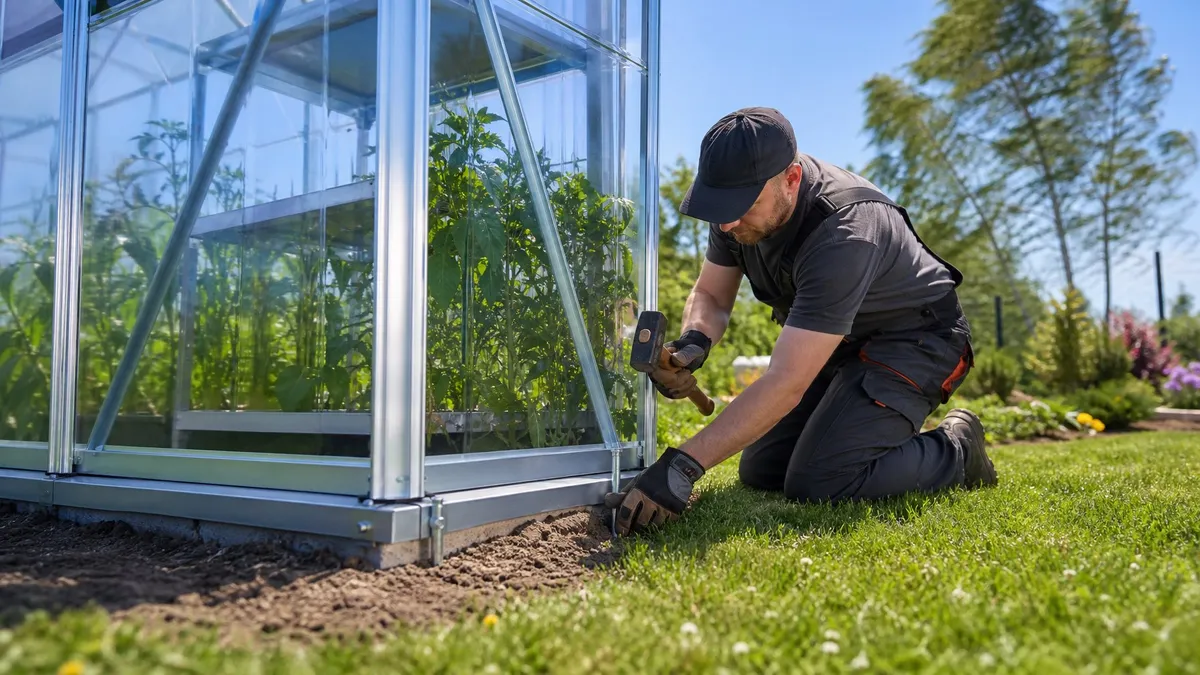
Even a well-anchored greenhouse can collapse if the frame itself isn't stiff enough to resist "racking" (twisting).
Adding Diagonal Bracing and Purlins
Diagonal braces (forming an 'X' or 'K' shape) on the walls and roof are the best way to stop a frame from folding. You can buy specialized bracing kits or use galvanized steel strapping.
Horizontal purlins (the bars that run the length of the roof) help distribute the wind load across all the rafters rather than stressing just one.
Upgrading Frame Fasteners and Joints
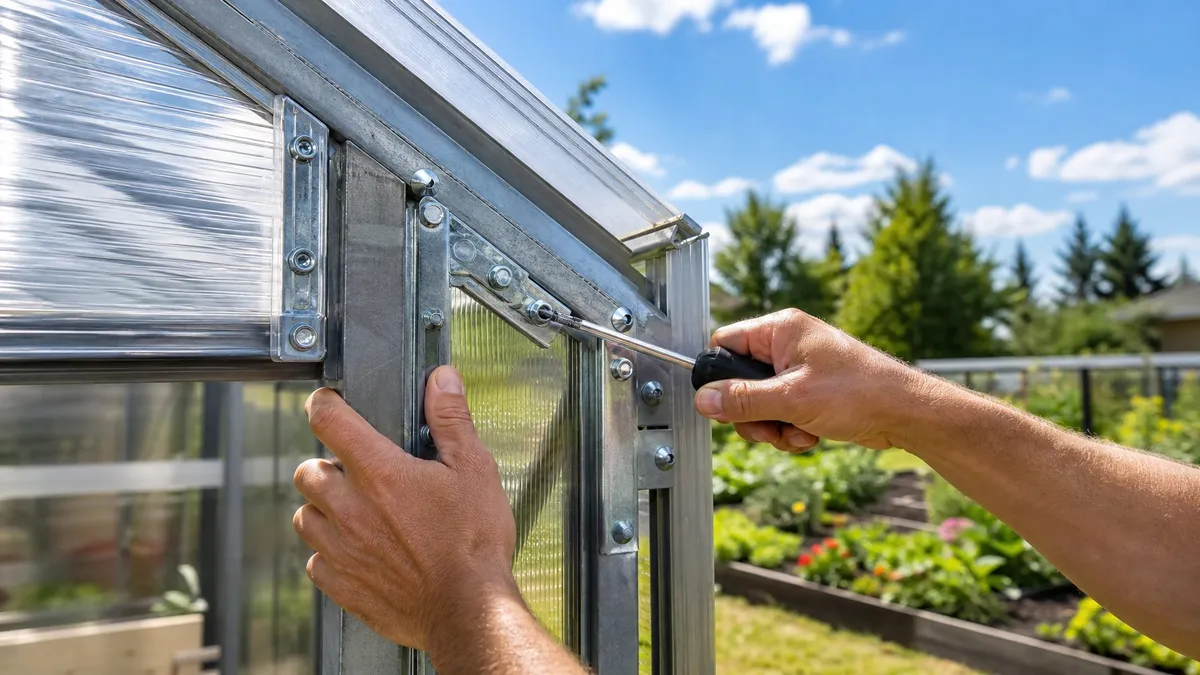
Standard greenhouse kits often come with cheap, soft-metal screws. Replace these with high-quality stainless steel or galvanized bolts and lock-washers.
Check every joint for "play" or wiggle room. If a joint can move, wind will eventually vibrate it until it fails. Use self-tapping screws to add extra connection points at major stress areas like the peak and corners.
Protecting Doors, Vents, And End Walls
Doors and vents usually let wind inside first. If a storm blows a door open, the sudden pressure spike can pop panels right off from the inside.
- Install sturdy barrel bolts or sliding locks on all doors, both at the top and bottom.
- Use automatic vent openers that latch vents closed when it’s cold.
- Add weatherstripping around door frames and vent edges to block drafts.
- On end walls, put a horizontal cross-bar or strut from the door frame to the peak. That keeps the gable from flexing.
For sliding doors, clean the track and check that the door closes and latches completely. Even a small gap can let in enough wind to cause real trouble.
Reduce Wind Load With Smart Design Choices
Reinforcement only does so much if wind keeps slamming into your greenhouse. Smarter design choices can cut down on the amount of force your structure has to handle in the first place.
Shape, ventilation strategy, and what you plant or build nearby all matter more than most people expect.
Shape, Size, And Roof Profile Considerations
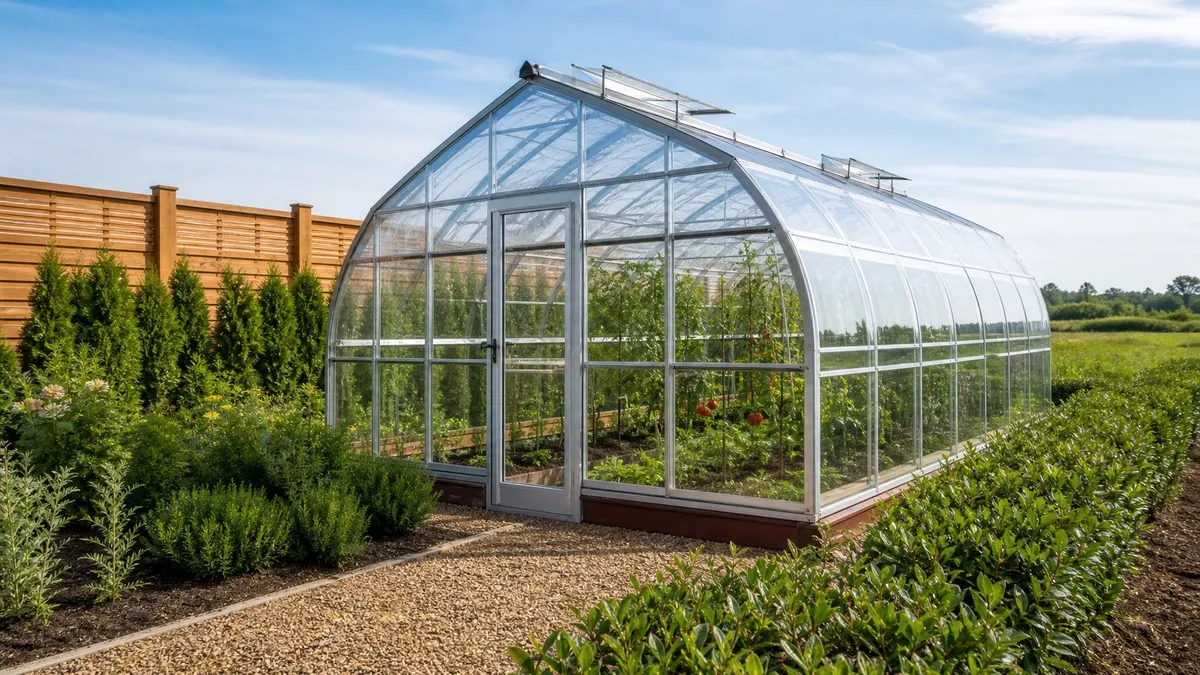
Shape really makes a difference. Rounded or gothic-arch roofs let wind flow over instead of hitting flat, which lowers uplift forces compared to a steep A-frame or a flat roof.
Smaller greenhouses naturally resist wind better, since there’s less surface for gusts to push against. If you’re in a windy spot, an 8x10 or 8x12 structure will ride out gusts better than a big 16x24—less wind load, less drama.
Try to keep the overall height down. Every extra foot gives wind more leverage against your base anchors.
Ventilation Openings That Do Not Become Weak Points
You’ll need ventilation, no way around it. Sierra Greenhouse suggests vent openings that make up about 15 to 20% of your floor area.
But don't let those vents become a weak spot in a storm. Pick vents with strong latches that snap tight in wind. If you use automatic vent openers (they run $25 to $80 each), get ones with manual override so you can lock them shut before a storm.
Louver-style vents seal tighter than basic hinged flaps and are less likely to catch wind if they’re partly open. Try not to put big vent openings on the windward end wall—move most ventilation to the leeward side or the roof, where wind passes over instead of blasting straight in.
Windbreaks, Fencing, And Landscape Buffers
A good windbreak is one of the cheapest, smartest ways to protect a greenhouse.
Some solid options:
- Hedgerows or dense shrubs planted 15 to 30 feet upwind; evergreens work year-round.
- Solid or semi-permeable fencing at six feet tall, set 20 to 40 feet upwind.
- Mesh wind-netting (50% permeable) slows wind down without making turbulence on the other side.
Permeable windbreaks—like hedges or mesh—actually work better than solid walls. Solid barriers create nasty eddies and turbulence downwind, while a 50% permeable barrier cuts wind speed more evenly and further out.
Plant windbreaks early. Hedges need two, maybe three seasons to grow tall enough to matter, so start sooner rather than later.
Prepare For Storms And Seasonal Maintenance
Even the strongest greenhouse needs regular checkups to stay storm-ready. If you keep up with seasonal maintenance and have a storm plan, you’re much more likely to get through rough weather without major repairs.
Pre-Storm Checklist For Hobby Greenhouses
If a storm’s coming, run through this quick list:
- Close and latch every door, window, and vent.
- Check all anchor points for looseness; tighten bolts and pound in any stakes that have lifted.
- Remove loose items from around the greenhouse—pots, tools, furniture—anything that could fly.
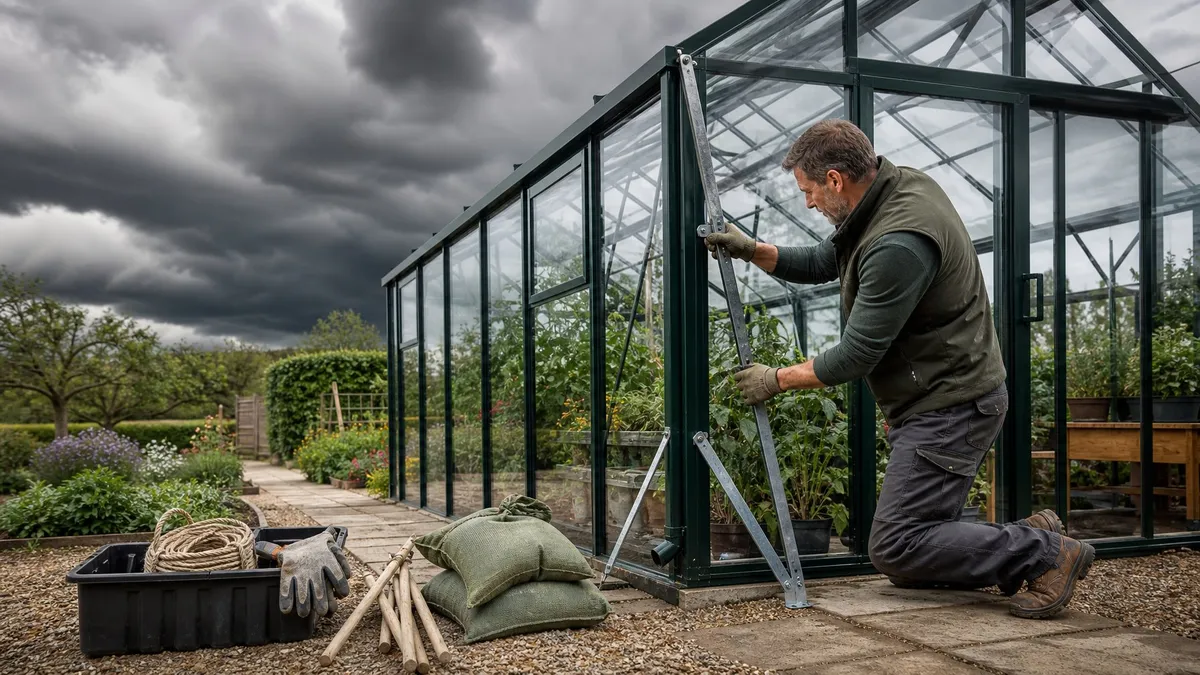
- Add temporary weight like sandbags or concrete blocks along the base, especially upwind.
- Secure loose panels with extra clips or glazing tape.
- Tie down shade cloth or plastic film so it can’t flap or catch wind.
Keep a small storm kit nearby: extra clips, zip ties, a roll of glazing tape, a cordless drill, and a tarp in case you need a quick patch.
What To Inspect After Heavy Wind Events
After a big wind, walk around your greenhouse before heading inside.
Check for:
- Panels that shifted, cracked, or popped out.
- Base rails that lifted or pulled away from anchors.
- Bent or twisted frame pieces, especially at corners and the gable peak.
- Doors or vents that won’t close flush anymore.
- Torn or stretched plastic film.
- Cracks in the foundation or shifted concrete footings.
Fix small stuff right away. If a panel moved a quarter inch this time, it’ll move more next time. A loose bolt today could just vanish by next month.
When To Upgrade Anchors Or Rebuild A Weak Base
Sometimes, tightening things just isn’t enough. Think about upgrading your anchors if:
- The greenhouse moved at all during a storm.
- You can pull rebar stakes out of the ground with your hands.
- The base frame shows stress—bent tabs, stretched bolt holes.
- You’ve added weight (heavier glazing, shelving, equipment) since building.
- Your area’s wind events have gotten worse since you put the greenhouse up.
Switching from rebar to auger anchors, or from augers to concrete footings, is usually cheaper than replacing broken panels or lost crops. Plan a full anchor and base check at least twice a year: before storm season and again after winter.
Frequently Asked Questions
Do greenhouses need to be bolted down to prevent storm damage?
Absolutely. If you don’t anchor your greenhouse, it’ll act like a sail—winds as low as 30 to 40 mph can flip or lift it. Bolting the base to the ground, a slab, or footings is the number one way to prevent storm damage.
What are the best ground anchors for a greenhouse on soil or grass?
Auger anchors (the screw-in type) work best for most soils. They twist 18 to 36 inches down and handle both uplift and sideways force way better than straight rebar stakes. Put them at every corner and every six to eight feet along the base.
How can I weigh down a greenhouse for winter winds?
Stack sandbags or concrete blocks along the inside of the base, focusing on the windward side. You can also use big water containers lined up along the base. These add temporary weight without changing the structure, which is great for seasonal wind.
Which wind straps work best for keeping a greenhouse frame stable?
Galvanized steel strapping or heavy-gauge wire installed as diagonal cross-braces across end walls and roof sections works best. Bolt or screw straps right into the frame—don’t just rely on friction-fit. That keeps the frame from twisting or racking in strong gusts.
How do I secure greenhouse plastic so it doesn't tear or flap in gusts?
Use a wiggle wire and channel track system to lock the plastic to the frame. This spreads tension out evenly and keeps the film from pulling free at one spot. Avoid staples or battens alone—they create stress points where tears usually start.
Is polycarbonate glazing strong enough for high winds, and how should it be fastened?
Quality polycarbonate panels hold up well against strong winds—assuming you fasten them correctly. Use glazing tape between the panel edges and frame channels to help dampen vibration.
Install aluminum or stainless steel clips every 12 to 18 inches along each edge. If panels can rattle, they'll eventually work loose, so stopping movement really matters.