
Sierra Greenhouse Insights
Growing Wasabi In A Greenhouse: Conditions And Care
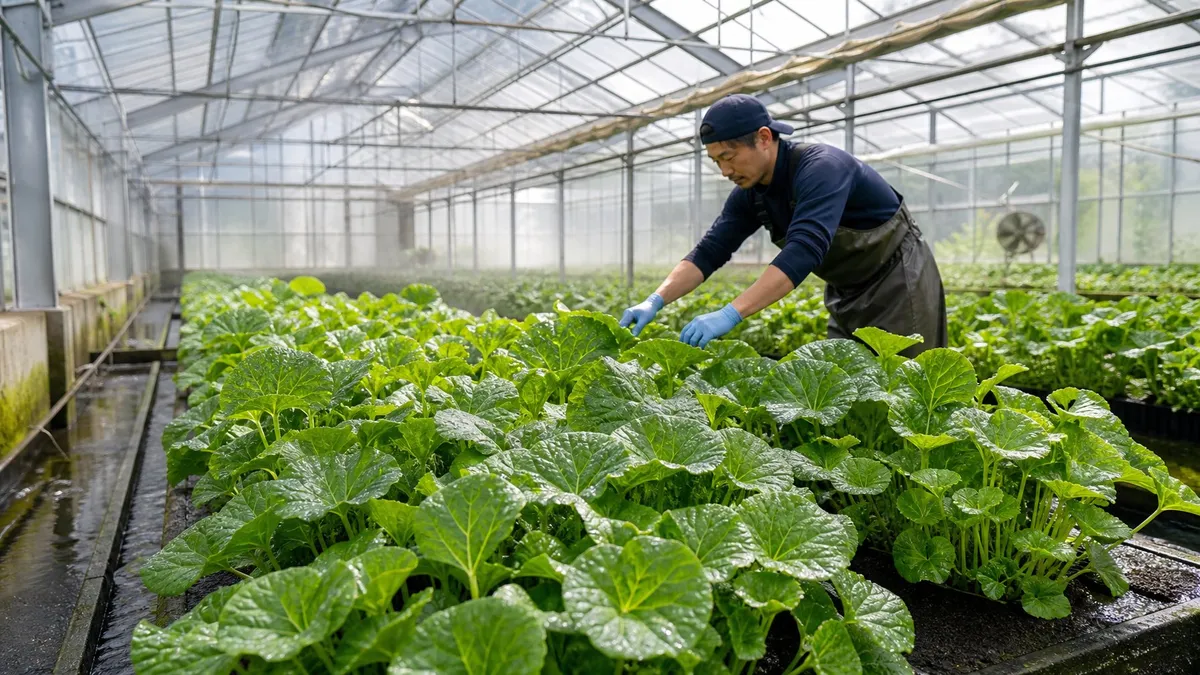
Real wasabi is one of the most expensive crops in the world, selling for $70 to $160 per pound fresh. It is also one of the hardest plants to grow. The green paste you get at most sushi restaurants is almost never authentic wasabi. It is usually a blend of horseradish, mustard, and green food coloring.
Growing wasabi in a greenhouse gives you the best shot at recreating the cool, shaded, humid conditions this plant demands in the wild. In its native Japan, Wasabia japonica grows along rocky streambeds under forest canopy. That means constant moisture, filtered light, and temperatures that rarely climb above 70°F. A greenhouse lets you control all of those variables in a way open-air gardening cannot.
The challenge is real. Wasabi takes 18 to 24 months to reach harvest. It is prone to rot, fungal disease, and heat stress. Temperature swings of even a few degrees can set a plant back by weeks. But with the right setup, patient care, and attention to water quality, you can grow fresh wasabi that tastes nothing like the imitation product on store shelves.
This guide covers everything you need to know, from greenhouse type and planting media to daily care, harvest timing, and lessons from commercial growers who have made it work.
Key Takeaways
- Wasabi needs cool temperatures (45°F to 70°F), heavy shade, and constant moisture, making a greenhouse the most practical way to grow it outside of the Pacific Northwest.
- Expect an 18- to 24-month timeline from planting to harvest, and start with live plantlets rather than seeds to save months of waiting.
- The entire plant is edible, including stems and leaves, and fresh wasabi delivers a flavor and aroma that no store-bought paste can match.
What Wasabi Needs Before You Start
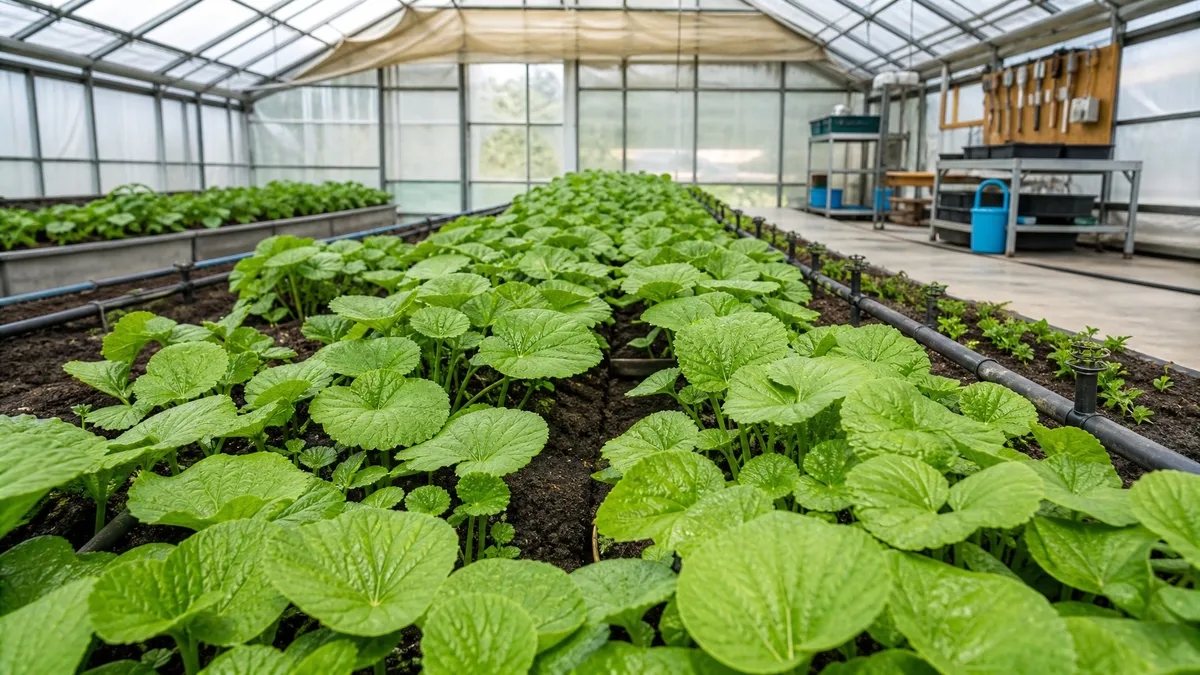
Wasabia japonica is a semi-aquatic plant native to the cool mountain streams of Japan. It demands a narrow range of temperature, light, and moisture that most gardens simply cannot provide. Getting these conditions right before you plant a single start is the difference between success and a frustrating failure.
Why Wasabi Is Harder Than Most Greenhouse Crops
Most greenhouse vegetables are forgiving. Tomatoes tolerate a wide temperature range. Lettuce bounces back from minor stress. Wasabi does not work that way.
This plant reacts quickly to heat, drought, and direct sunlight. Temperatures above 80°F can cause leaf wilting within hours. Stagnant water around the roots invites fungal disease that can destroy a crop overnight. Even experienced growers describe authentic Japanese wasabi as one of the most demanding crops they have ever attempted.
The slow growth cycle adds to the difficulty. You are committing 18 to 24 months of greenhouse space, energy, and attention to a single crop. Mistakes made early compound over time.
Temperature, Shade, And Humidity Targets
Wasabi grows best in a wet, moderately warm climate between 45°F (7°C) and 70°F (21°C). Night temperatures should stay above freezing but ideally remain in the 45°F to 55°F range.
Humidity needs to stay high, generally between 70% and 90%. Without adequate humidity, leaf edges brown and growth stalls.
Direct sunlight is harmful. In the wild, wasabi grows under a dense tree canopy. Your greenhouse needs 70% to 80% shade cloth to replicate those conditions. The goal is bright, indirect light with no direct sun hitting the leaves during midday.
Why Wasabia japonica Behaves Like A Semi-Aquatic Plant
In Japan, wasabi plants grow with their roots partially submerged in flowing stream water. The roots need constant moisture, but they also need oxygen. Standing water causes rot. Flowing or draining water delivers both hydration and aeration at the same time.
This is why drainage is so critical in a greenhouse setup. You are not just keeping the soil moist. You are mimicking the steady flow of a mountain stream, where fresh, cool, clean water moves past the roots continuously. Gravel-based beds, raised containers with drainage holes, and drip irrigation systems all help recreate this effect.
Choosing The Right Greenhouse Setup
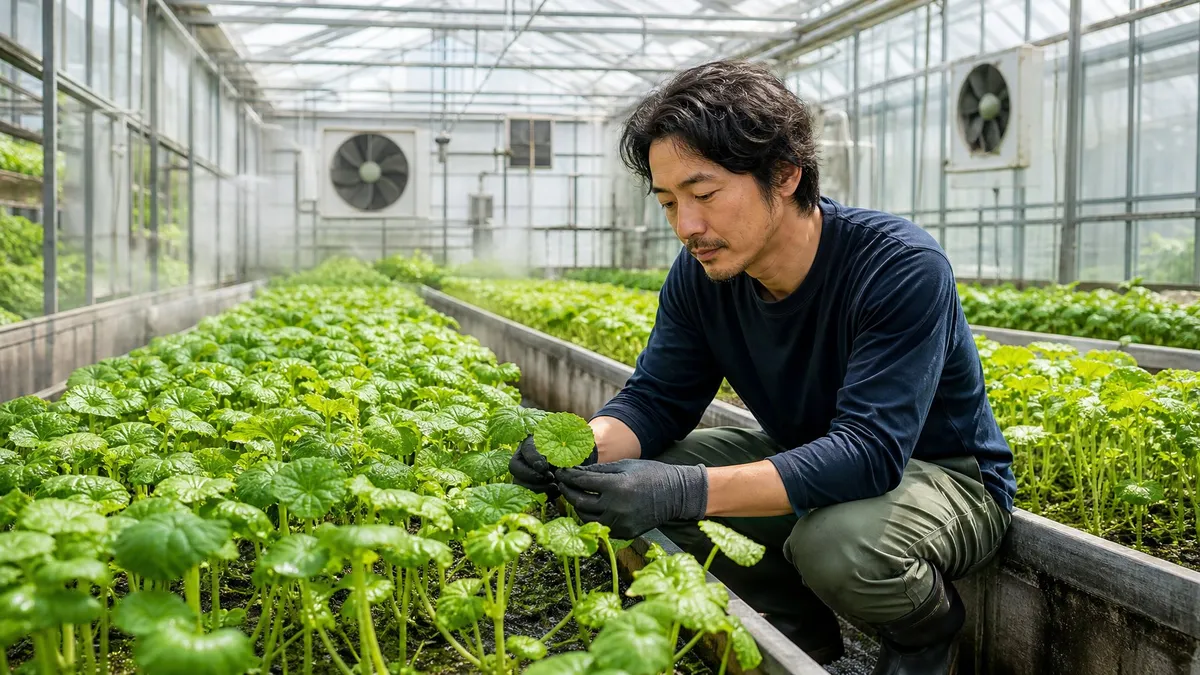
The type of greenhouse you choose determines how easily you can maintain the cool, humid, shaded environment wasabi requires. A standard backyard greenhouse can work, but you will need to modify airflow, shading, and possibly cooling systems to keep conditions stable over an 18- to 24-month growing cycle.
Best Greenhouse Types For Stable Conditions
Wide, freestanding high-tunnel greenhouses are a popular choice among wasabi growers. They provide ample headroom for air circulation and enough floor space to set up gravel beds or raised containers with proper drainage.
Polycarbonate-paneled greenhouses offer a natural advantage here. Twin-wall polycarbonate diffuses light, which reduces the need for heavy shade cloth. It also insulates better than glass (R-1.6 vs. R-0.9), helping buffer temperature swings during cool nights.
A lean-to greenhouse attached to a north-facing wall can also work well. The shared wall provides thermal mass and natural shade during the hottest part of the day. Sierra Greenhouse notes that lean-to designs can reduce heating costs by 15% to 30%, which matters during cold-season wasabi production.
Avoid small, poorly ventilated hobby greenhouses. They overheat too quickly and lack the airflow wasabi demands.
Shade Cloth, Airflow, And Ventilation Strategy
Install 70% to 80% shade cloth across the entire roof and south-facing walls. Wasabi cannot tolerate direct sunlight, so this step is non-negotiable.
Airflow is equally important. Horizontal Air Flow (HAF) fans keep humidity even throughout the greenhouse and prevent stagnant pockets of moist air that encourage fungal growth. Position fans to create a gentle, continuous breeze across the plant canopy.
Roof vents should be sized to cover at least 15% to 20% of the floor area. Side louvers or roll-up walls help draw in cooler air from ground level. For greenhouses over 200 square feet, an exhaust fan rated at 1 CFM per square foot is a practical addition during warmer months.
When A Climate-Controlled Greenhouse Makes Sense
If you live outside USDA zones 7 to 9, or anywhere summers regularly exceed 80°F, a climate-controlled greenhouse becomes almost essential for wasabi.
This means adding evaporative cooling pads, misting systems, or even a small air conditioning unit to keep temperatures below 70°F during peak summer. It also means installing a thermostatically controlled heater for winter to prevent temperatures from dropping below freezing.
The investment is significant. But wasabi's high market value and the near impossibility of growing it in hot, dry climates without climate control can justify the cost for serious growers. Think of it as building a specialized growing chamber rather than a general-purpose greenhouse.
Planting Media, Watering, And Propagation
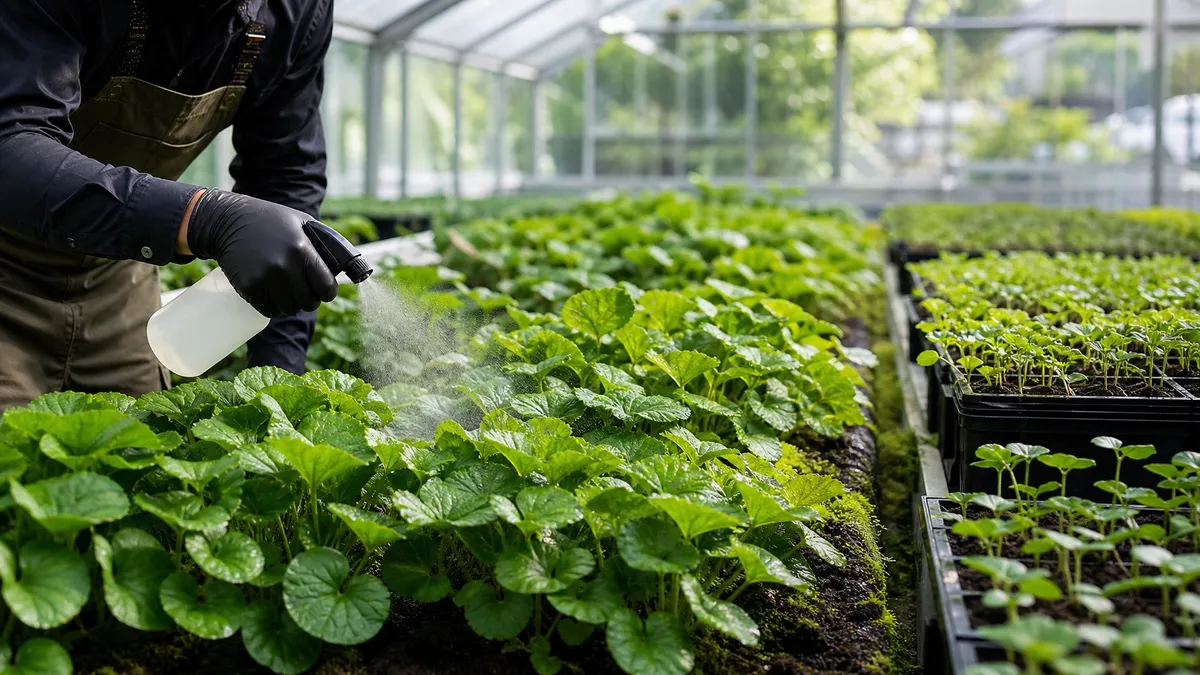
Getting the growing medium, water supply, and starting material right sets the foundation for everything that follows. Wasabi rhizomes need constant moisture with excellent drainage, clean water free of contaminants, and a planting medium that holds moisture without becoming waterlogged.
Soil And Drainage Requirements
Wasabi does not thrive in standard potting soil. The roots and developing rhizome need a loose, gritty mix that drains quickly while retaining some moisture.
A good starting mix combines:
- Coarse gravel or perlite (40% to 50%) for drainage and aeration
- Organic compost (20% to 30%) for nutrients and moisture retention
- Coarse sand (20% to 30%) for structure
Raised beds or deep containers (at least 8 to 10 inches) work well. Make sure every container has multiple drainage holes. Standing water at the root zone is the fastest way to kill a wasabi plant.
Some commercial growers use pure gravel beds with a slow flow of water running through them, mimicking the rocky streambeds where wasabi grows naturally. This approach requires more infrastructure but produces excellent results.
Wasabi Starts Vs Wasabi Seeds
You have two options for starting wasabi: seeds or live plantlets (also called starts or divisions from an existing wasabi rhizome).
Wasabi seeds are difficult to germinate. They require a 24-hour soak before planting and can take 1 to 3 months to sprout, with inconsistent success rates. Seeds also add several months to an already long growing timeline.
Wasabi starts (small plantlets or offshoots from a mature rhizome) are the faster, more reliable option. They shave months off the total time to harvest and establish more quickly in greenhouse conditions.
For most home growers, purchasing live starts from a reputable supplier is the recommended path. Seeds make sense only if you want to experiment or cannot source live plants.
Water Quality, Misting, And Micro-Irrigation
Water quality matters more with wasabi than with almost any other greenhouse crop. The plant is sensitive to chlorine, salts, and mineral buildup.
Use distilled, filtered, or rainwater whenever possible. If you rely on tap water, let it sit for 24 hours to off-gas chlorine, or use a basic carbon filter.
Drip irrigation is the most efficient delivery method. Set emitters to provide a slow, steady supply of moisture to each plant. Avoid overhead watering, which keeps foliage wet and encourages fungal problems.
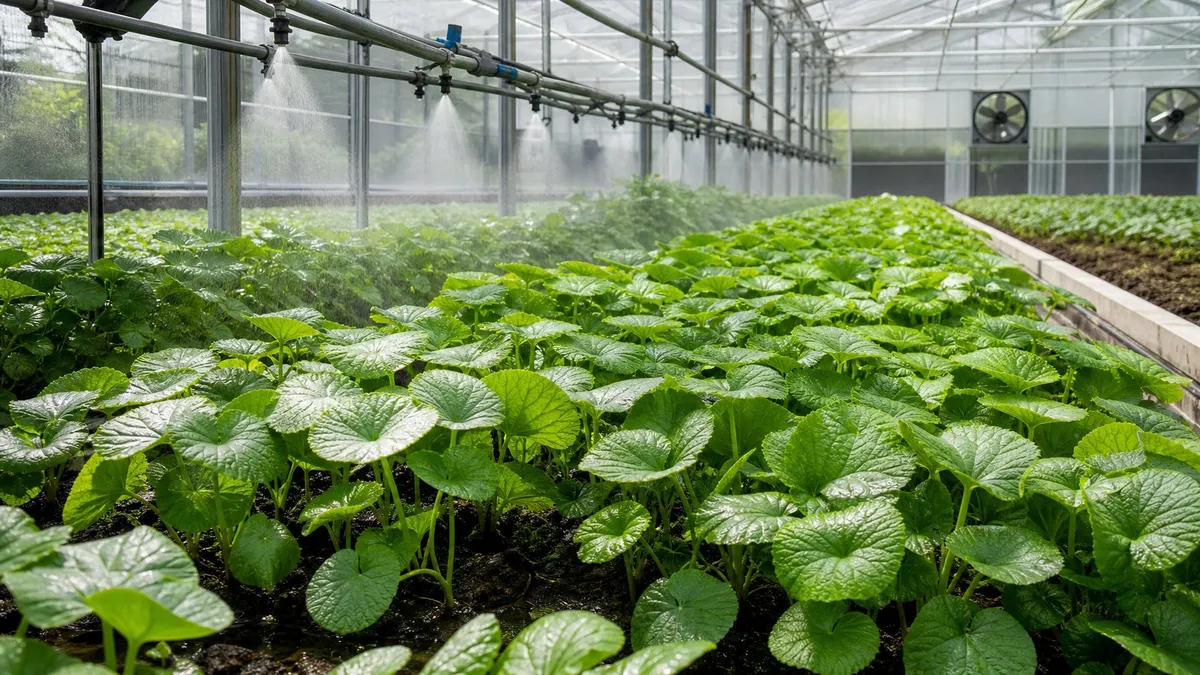
Misting systems are valuable for maintaining the 70% to 90% humidity wasabi needs. Time misting cycles for short bursts (10 to 15 seconds) several times per hour during dry or warm periods. A moisture meter ($10 to $25) helps you monitor the root zone and avoid overwatering.
Daily Care And Common Failure Points
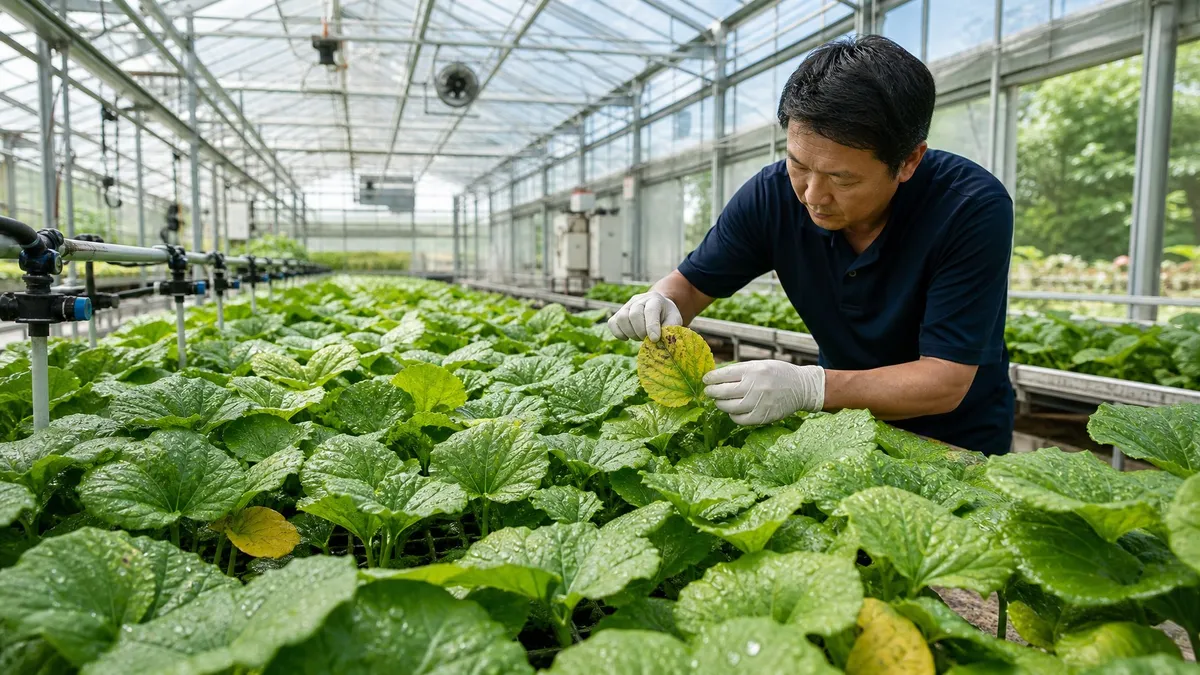
Wasabi's reputation as one of the hardest crops to grow comes down to its intolerance for environmental swings and its vulnerability to root and crown diseases. Consistent daily monitoring, good greenhouse hygiene, and seasonal adjustments are what separate a successful crop from a lost one.
Preventing Heat Stress And Sudden Swings
Heat is the single biggest threat to wasabi in a greenhouse. Temperatures above 75°F to 80°F cause leaf wilting, slowed growth, and increased disease susceptibility.
Check your greenhouse thermometer at least twice daily during warm months, once in the morning and once in the early afternoon when temperatures peak. An inexpensive min/max thermometer helps you track overnight lows and midday highs.
If temperatures spike unexpectedly, open all vents and doors immediately. Run exhaust fans. Activate misting systems to cool the air through evaporation. On the coldest nights, a frost-protection thermostat set to 35°F to 40°F prevents freezing without running up heating costs.
The key is consistency. Wasabi handles steady cool temperatures well. It handles sudden changes poorly.
Managing Rot, Fungal Pressure, And Greenhouse Hygiene
Fungal disease and stem rot are the leading causes of wasabi crop failure in greenhouses. The combination of high humidity and warm pockets of stagnant air creates ideal conditions for pathogens like Phoma wasabiae.
Prevent problems with these daily and weekly habits:
- Remove dead or yellowing leaves as soon as you notice them
- Keep the soil surface clean of fallen debris
- Bottom-water when possible to avoid wetting the crown and foliage
- Run HAF fans continuously to prevent still, humid air pockets
- Quarantine any new plants for 7 to 14 days before placing them near existing wasabi
- Use sticky yellow traps near the growing area to catch fungus gnats early
If you spot soft, dark spots on the stem or crown, isolate the affected plant immediately. Remove and discard infected tissue. Do not compost it.
Spacing, Monitoring, And Seasonal Adjustments
Give each wasabi plant about 1 to 1.5 square feet of space. Crowding restricts airflow and raises humidity around the crowns, which invites disease.
In spring and summer, increase shade cloth coverage and ventilation. In fall and winter, reduce misting frequency and monitor for condensation buildup on greenhouse walls. Condensation dripping onto plants can be just as harmful as overhead watering.
Feed with a sulfur-rich fertilizer every 4 to 6 weeks during active growth. Wasabi is not a heavy feeder, so lighter, more frequent applications work better than large doses.
Harvest Timing, Yield Expectations, And Use
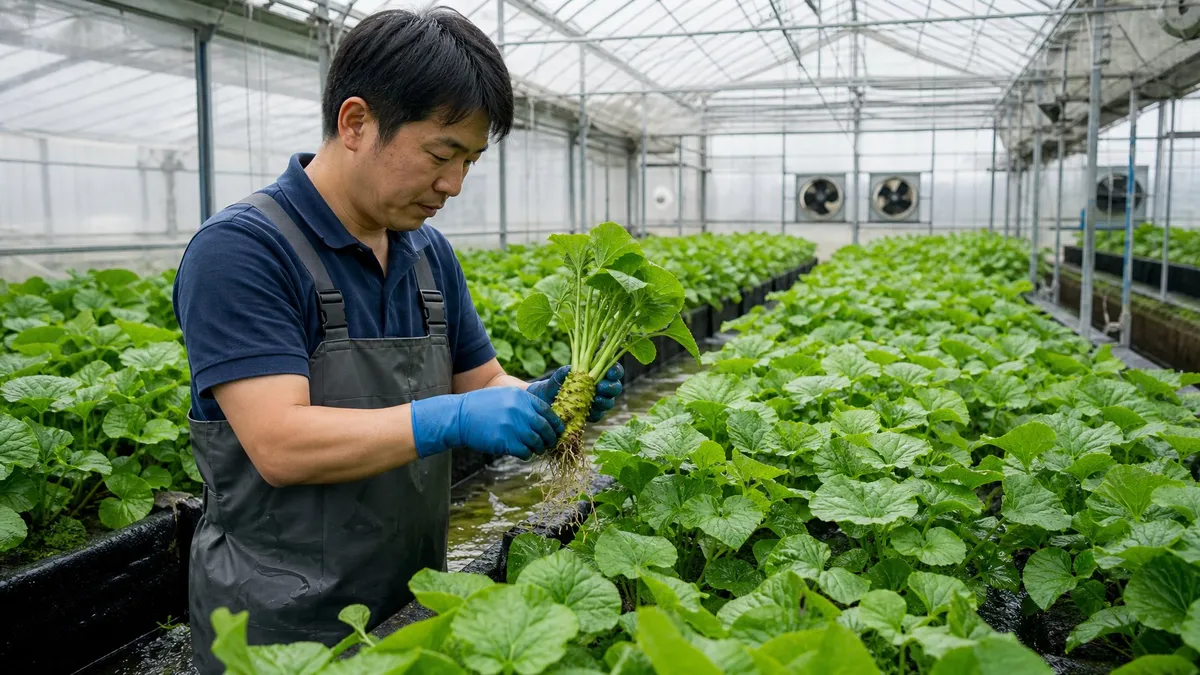
After 18 to 24 months of careful attention, harvest day is the payoff. The wasabi rhizome is the prized part of the plant, but every other piece is edible and valuable too. Fresh wasabi delivers a flavor profile that no store-bought wasabi paste or wasabi powder can replicate.
How Long Rhizomes Take To Mature
Most wasabi rhizomes reach harvestable size between 18 and 24 months after planting. Some larger rhizomes may take up to three years to develop full flavor and commercial-grade size.
You will know a rhizome is ready when it reaches about 4 to 6 inches in length and roughly the diameter of a thumb or larger. The outer skin should be rough and textured, not smooth.
Harvest by gently pulling the entire plant from the growing medium. Rinse the rhizome under cool, clean water. Remove the leaves and stems (save them, as they are edible). Trim the small root hairs from the rhizome.
Fresh wasabi rhizomes are best used within a few weeks of harvest. Store them wrapped in a damp paper towel inside a sealed container in the refrigerator. They can last 2 to 4 weeks this way.
What Else You Can Harvest From The Plant
The rhizome gets all the attention, but every part of the wasabi plant has culinary value.
- Wasabi stems (petioles) can be pickled, chopped into salads, or used as a garnish. They carry a milder version of the rhizome's heat.
- Leaves are edible raw or lightly sautéed. They have a peppery, green flavor similar to arugula with a mild wasabi kick.
- Flowers, when the plant bolts, are also edible and make a striking garnish.
Harvesting leaves and stems periodically during the growing cycle does not harm the plant significantly, as long as you leave enough foliage to support continued growth. Think of it as getting small returns on your investment while the rhizome matures.
Fresh Flavor Vs Prepared Retail Products
If you have only ever tasted the green paste served at sushi restaurants, you have almost certainly never tasted real wasabi. Over 99% of "wasabi" sold in the U.S. is a mixture of horseradish, mustard, and artificial coloring.
Pure wasabi, freshly grated from a rhizome, is a completely different experience. The heat is sharp but fleeting, rising quickly through the nose and then fading within seconds. It has a natural sweetness and a complex, almost floral aroma that imitation products cannot replicate.
To prepare fresh wasabi, grate the rhizome on a fine grater (traditionally a sharkskin grater called an oroshi). Let the paste sit for 1 to 2 minutes to develop full flavor. Use it within 15 to 20 minutes for peak potency, as the essential oils break down quickly once exposed to air.
Lessons From Commercial Wasabi Growers
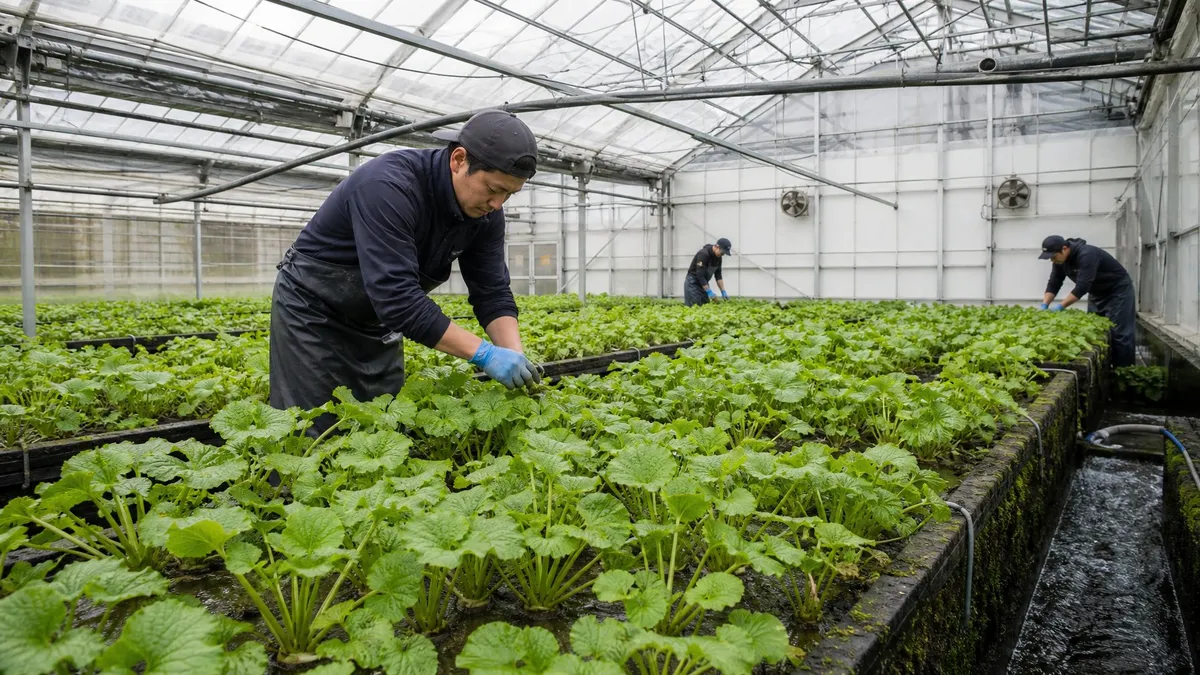
Commercial wasabi operations offer hard-earned insights that home growers can apply on a smaller scale. Companies like Shima Wasabi (a TasFoods Limited brand in Tasmania), and specialty distributors like Sydney Direct Fresh Produce (SDFP), have spent years refining their approach to this notoriously difficult crop.
What Specialty Producers Can Teach Home Growers
Growers like Luke Kohler of Shima Wasabi have demonstrated that wasabi can be cultivated outside of Japan with the right infrastructure. Their success comes down to obsessive environmental control, especially around water quality, temperature stability, and disease prevention.
Massimo Mele, a fruit and vegetable wholesaler who has worked to connect growers with chefs, emphasizes that quality and freshness determine everything in the wasabi market. Even a perfectly grown rhizome loses value rapidly after harvest if storage and handling are not precise.
The takeaway for home growers: invest your effort in getting the environment right before planting, and have a plan for using your harvest quickly.
Why Distribution And Product Form Matter
Commercial growers have learned that fresh wasabi rhizomes command the highest prices ($70 to $160 per pound), but they also spoil the fastest. Many operations supplement rhizome sales with value-added products like wasabi paste, freeze-dried wasabi powder, and pickled wasabi stems.
For home growers, this is worth considering. If you produce more than you can use fresh, processing and preserving the harvest extends its life and reduces waste. Freezing grated wasabi paste in small portions is one of the simplest methods.
Even the leaves and stems have market or kitchen value, making the entire plant productive rather than just the rhizome.
When Wasabi Is Better As A Niche Greenhouse Crop
Wasabi is not a crop you scale up easily. The long growing cycle, intense environmental demands, and high failure risk make it a poor candidate for filling an entire greenhouse.
Instead, it works best as a niche crop occupying a dedicated section of your greenhouse, ideally a cooler, shadier corner that might be underused by other plants. This "meet the grower" approach, treating wasabi as a specialty addition rather than a primary crop, mirrors what many small commercial producers do.
Pair it with other shade-tolerant, cool-season crops like lettuce, spinach, or herbs to make full use of the controlled environment you have built.
Frequently Asked Questions
What temperature and humidity levels are ideal for healthy wasabi plants year-round?
Wasabi grows best between 45°F and 70°F, with nighttime temperatures ideally staying in the 45°F to 55°F range. Humidity should remain between 70% and 90% throughout the year. Temperatures above 80°F cause leaf wilting and can trigger disease.
How much shade or light do wasabi plants need in a controlled environment?
Wasabi requires 70% to 80% shade cloth to block direct sunlight. The plant needs bright, indirect light, similar to what it receives under a forest canopy in its native habitat. Direct sun on the leaves causes scorching and heat stress.
What is the best growing medium and container setup for wasabi roots and crowns?
A loose, gritty mix of coarse gravel or perlite (40% to 50%), organic compost (20% to 30%), and coarse sand (20% to 30%) works well. Use raised beds or containers at least 8 to 10 inches deep with multiple drainage holes. Standing water at the root zone causes rot and kills plants quickly.
Can wasabi be grown hydroponically, and what water quality parameters matter most?
Yes, wasabi can be grown hydroponically, and some commercial growers use gravel-bed hydroponic systems that mimic natural streambeds. Water should be clean, cool (55°F to 65°F), and free of chlorine and excess minerals. Distilled, filtered, or rainwater produces the best results.
How do you start wasabi from seed versus plantlets, and how long does it take to mature?
Seeds require a 24-hour presoak and can take 1 to 3 months to germinate with inconsistent success. Live plantlets or rhizome divisions establish much faster and are the recommended option for most growers. Either way, expect 18 to 24 months from planting to a harvestable rhizome.
What are the most common pests and diseases affecting wasabi, and how can they be prevented?
Fungal diseases, especially Phoma wasabiae, and stem rot are the most damaging threats. Fungus gnats and aphids can also cause problems. Prevent issues by maintaining strong airflow with HAF fans, removing dead plant material promptly, bottom-watering to keep foliage dry, and quarantining new plants for 7 to 14 days before introducing them to your growing area.