
Sierra Greenhouse Insights
Greenhouse Profit Per Square Foot: Maximizing Returns
When you run a greenhouse, your profit comes down to what each square foot earns after costs. Greenhouse profit per square foot is the single number that tells you whether your growing space is working hard enough or just taking up room. Whether you grow tomatoes for your family or microgreens for restaurant accounts, this metric separates hobbyists who break even from growers who build real income.
Most greenhouse operations see profit margins between 15% and 40% on produce, and well-run specialty operations can push past 50%. The difference between the low end and the high end almost always traces back to crop choice, space efficiency, and how you sell what you grow. A 1-acre hydroponic greenhouse focusing on high-demand crops can gross $300,000 to $500,000 per year, while a small hobby house under 5,000 square feet might bring in $30,000 to $70,000 in owner income.
Your goal is to understand exactly where those dollars come from, which costs eat into them, and what levers you can pull to improve your return without pouring concrete for a bigger building. This guide walks through the math, the crops, the costs, and the sales strategies that shape greenhouse profitability in 2026.
Key Takeaways
- Your greenhouse profit per square foot depends more on crop turns, layout efficiency, and sales channels than on total greenhouse size.
- Fast-turn crops like microgreens, leafy greens, and fresh herbs typically deliver the highest revenue per square foot of growing space.
- Heating, labor, and energy are the biggest margin killers, and managing them well is the fastest path to stronger net profit.
How To Measure Returns From Growing Space
Measuring returns starts with separating revenue, gross margin, and net profit, then applying those numbers to every square foot of usable growing area. A greenhouse that earns $10 per square foot in gross revenue may only keep $2 after costs, and the difference between those two numbers is where most growers lose track of their real performance.
Revenue Vs. Gross Margin Vs. Net Profit
Revenue per square foot is your total sales divided by your total growing area. It tells you how much money flows in but says nothing about what you keep. Gross margin subtracts your direct costs (seeds, soil, nutrients, packaging) from revenue. Net profit goes further and removes fixed costs like heating, insurance, loan payments, and labor.
A greenhouse generating $15 per square foot in revenue might have a gross margin of $9 and a net profit of $3. Tracking all three numbers separately lets you spot whether a crop earns well but costs too much to grow, or whether overhead is dragging down an otherwise strong product.
The Basic Formula For Square-Foot Analysis
The core calculation is simple:
| Metric | Formula | | ---------------------- | --------------------------------------------- | | Revenue per sq ft | Total revenue ÷ total growing area | | Gross profit per sq ft | (Revenue - direct costs) ÷ total growing area | | Net profit per sq ft | (Revenue - all costs) ÷ total growing area |
Use growing area rather than total floor space. Pathways, storage, and equipment zones do not produce crops, so including them inflates your numbers and hides poor performance.
Why Crop Turns Matter More Than Size Alone
A 200-square-foot bench growing microgreens that harvest every 10 days produces 36 crop turns per year. That same bench growing tomatoes produces one or two turns. Even if tomatoes earn more per harvest, the microgreen bench may generate three to five times more annual revenue from the same footprint.
Crop turns multiply your revenue per square foot over time. A smaller greenhouse with fast-rotating crops can outperform a larger house growing slow-cycle produce. When you project your income, always calculate on an annual basis rather than per-harvest.
How Pathways, Benches, and Layout Affect Usable Area
A common rule of thumb is to add 30% to your required growing area for pathways and access. That means a 10x12-foot greenhouse (120 square feet) may only offer 80 to 85 square feet of actual planting space.
Benching systems, vertical shelving, and tiered racks can recover lost ground. Adding two or three tiers of shelving to a 100-square-foot floor area can effectively create 200 to 300 square feet of growing space. Every square foot you reclaim through smart layout directly increases your profit potential without adding a single panel of glazing.
What Typical Results Look Like By Greenhouse Model
Greenhouse earnings vary enormously depending on scale, technology, and crop focus. A backyard hobby setup and a high-tech hydroponic facility operate in completely different financial worlds, even when they grow the same crops. Knowing which model fits your situation helps you set realistic income expectations.
Hobby Houses and Side-Income Setups
If you run a small greenhouse under 5,000 square feet, expect owner income in the $30,000 to $70,000 range annually, assuming you sell surplus at farmers markets or through direct sales. Many hobby growers do not sell at all, making their "profit" the grocery savings they generate.
For a family growing vegetables in an 8x12-foot greenhouse, Sierra Greenhouse estimates potential grocery savings of $150 to $300 per month. That is not cash income, but it is real value. If you do sell, your net profit per square foot will likely land between $2 and $8 depending on crop mix and local demand.
Small Commercial and Market-Garden Scenarios
Operations in the 2,000 to 10,000 square foot range can push into six-figure gross revenue if crops and sales channels are optimized. A 2,000-square-foot high tunnel growing tomatoes at $3.50 per pound with a single production cycle might gross around $105,000 annually.
At this scale, labor and energy become your two biggest cost categories. Margins typically fall between 20% and 35%. The growers who reach the higher end tend to sell direct-to-consumer rather than wholesale, and they rotate in fast-turn crops like lettuce and herbs between fruiting crop cycles.
Hydroponic Greenhouse and CEA Benchmarks
Controlled environment agriculture (CEA) and hydroponic greenhouse operations achieve higher yields per square foot than soil-based systems. Profit margins for well-managed hydroponic setups generally range from 25% to 35%, compared to 15% to 25% for traditional greenhouses.
A next-generation greenhouse on one hectare (roughly 107,000 square feet) can generate first-year revenue around $280,000 or more. The initial build cost is steep, ranging from $10 to over $100 per square foot depending on technology level. But yield density and year-round production make the math work over a 3- to 7-year payback window.
When a Vertical Farm Model Changes the Math
Vertical farming stacks growing layers to multiply output from the same floor footprint. Revenue per square foot of floor space can be dramatically higher than in a single-level greenhouse because you are growing on three, five, or even ten tiers.
The trade-off is cost. Lighting, HVAC, and infrastructure expenses are much higher in vertical systems. Profit per square foot after costs may not be better than a well-run greenhouse unless you are growing very high-value crops like microgreens or specialty herbs. Vertical farming works best in urban markets where land is expensive and buyers pay premium prices for ultra-local produce.
The Crops That Usually Produce The Best Margins
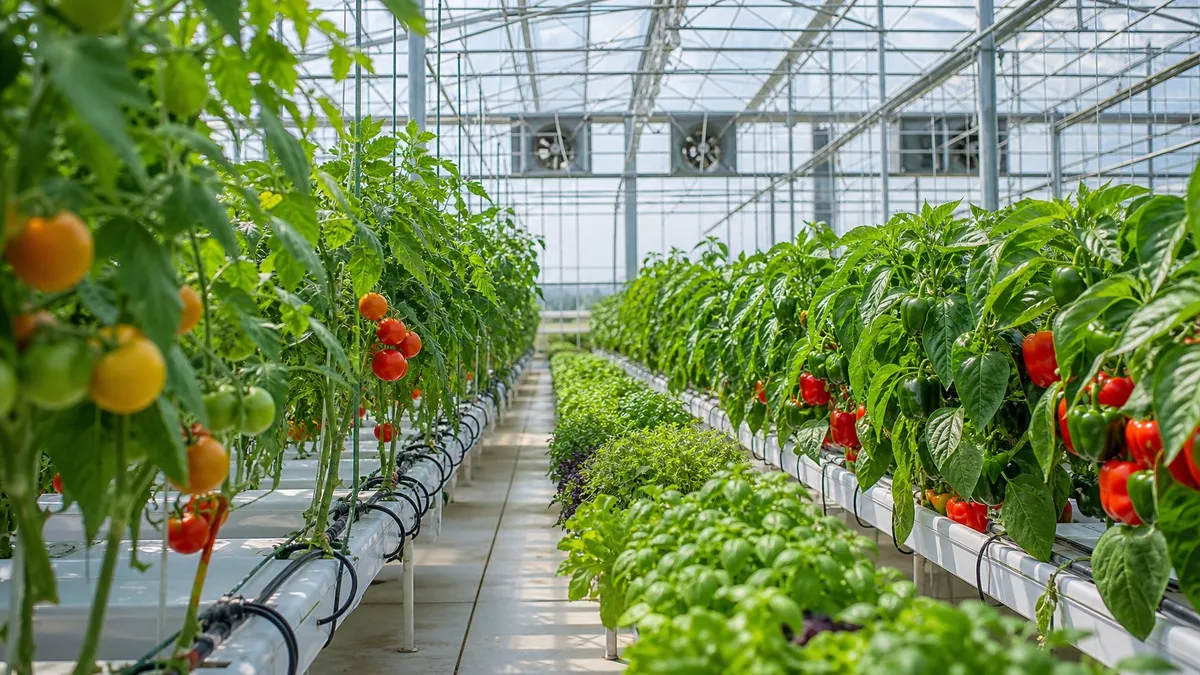
Crop selection is the single biggest lever for improving profit per square foot. Fast-turn greens, high-demand herbs, and niche specialty products consistently outperform commodity crops grown at small scale. Matching your crop mix to your local market and climate conditions determines whether your greenhouse earns $3 or $30 per square foot annually.
Fast-Turn Greens and Fresh Herb Crops
Microgreens are widely considered the most profitable greenhouse crop per square foot. They grow from seed to harvest in 7 to 21 days, allowing 17 to 36 crop turns per year. You can grow them in stacked trays, making each square foot of floor space work multiple times over.
Leafy greens like lettuce and salad mix offer strong margins too, especially cut-and-come-again varieties that produce for months from a single planting. Fresh herbs, particularly basil, generate impressive contribution margins. Basil can achieve a 70% contribution margin based on roughly $25 per kilogram in revenue against $7.50 per kilogram in variable costs. Cilantro and mint round out the herb category with reliable demand year-round.
| Crop | Harvest Cycle | Annual Turns | Relative Revenue per Sq Ft | | ------------------- | ------------- | ------------ | -------------------------- | | Microgreens | 7-21 days | 17-36 | Very high | | Lettuce / salad mix | 30-45 days | 8-12 | High | | Basil | 21-28 days | 10-15 | High | | Cilantro | 21-30 days | 10-14 | Moderate-high |
Fruiting Crops With Strong Demand
Tomatoes, peppers, and cucumbers take longer to produce but command strong per-pound prices, especially when sold as greenhouse-grown or organic. Indeterminate tomatoes can yield 20 to 50 pounds per plant with a grocery value of $60 to $150 per plant over the season. Cherry tomato varieties often command premium pricing and sell well at farmers markets.
Peppers yield 4 to 8 pounds per plant with a grocery value of $20 to $40 per plant. Cucumbers fall in a similar range. These crops need more space (4 to 6 square feet per tomato plant), so your revenue per square foot is lower than greens. But consistent local demand and the ability to charge premium prices for vine-ripened flavor make them solid contributors to your crop mix.
Niche and Specialty Products With Premium Pricing
Edible flowers, saffron, gourmet mushrooms, and specialty cut flowers all command prices that commodity crops cannot touch. Profit margins on specialty items can exceed 50%, sometimes reaching well beyond that for truly niche products.
The risk is market size. You need buyers willing to pay $20 to $50 per pound for edible flowers or $10 to $15 per small clamshell. Restaurants, high-end grocery stores, and direct online sales are the typical channels. If your local market supports these products, even dedicating 10% to 20% of your growing space to specialty items can meaningfully boost your average profit per square foot.
Matching Crop Mix To Market and Climate
The best crop plan balances fast-turn high-margin crops with steady-demand staples. Growing only microgreens exposes you to market saturation. Growing only tomatoes ties up space for months with no revenue until harvest.
Consider your climate zone as well. Cold-climate growers in USDA zones 3 to 6 may find that cold-hardy crops like kale, spinach, and lettuce grow well through winter in unheated greenhouses, keeping costs low. Warmer zone growers can produce fruiting crops year-round. Talk to your local buyers, visit your nearest farmers market, and identify gaps before you plant.
The Costs That Shrink Margin Fastest
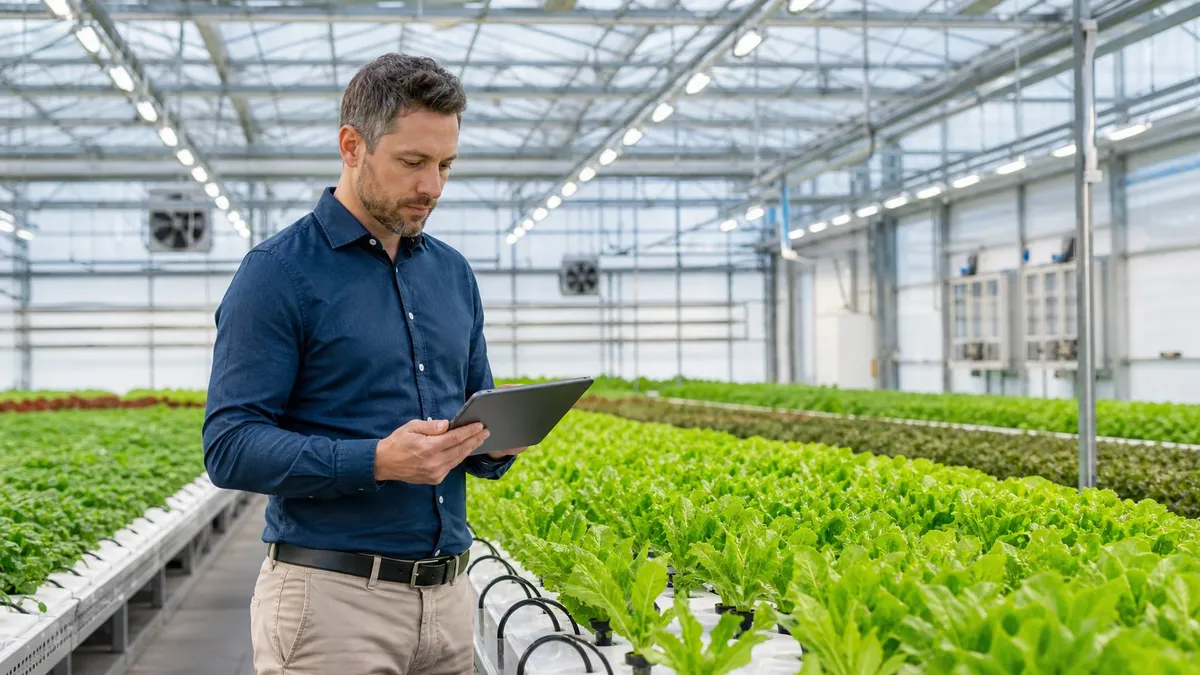
Energy for climate control can eat up to 30% of your operating budget, and labor typically accounts for another 20% to 40%. Knowing where your money goes is the only way to protect the margin your crops generate. Even strong revenue per square foot means little if costs consume most of it before you take home a paycheck.
Heating, Lighting, and Seasonal Energy Burden
Heating is the largest single operating expense for most greenhouse growers in USDA zones 3 through 7. For an 8x12-foot hobby greenhouse heated to 60°F in zone 5, annual heating costs range from $400 to $1,400 depending on fuel type. Scale that up to a commercial operation and energy bills become a defining factor in profitability.
LED grow lights used four hours per day in winter add roughly $60 to $180 per year for a small greenhouse. In larger operations, lighting can represent a major line item. Double-layer polycarbonate glazing, thermal mass (water barrels, stone floors), and frost-protection thermostats are cost-effective ways to reduce your energy burden.
Labor, Packaging, and Delivery Expenses
Labor often represents the second-largest cost. Seeding, transplanting, harvesting, cleaning, and delivering product all take time. At small scale, you absorb this cost with your own hours. At commercial scale, paid labor at $15 to $20 per hour adds up fast, especially for hand-harvested crops like tomatoes and herbs.
Packaging and delivery costs sneak up on growers who sell direct. Clamshells, labels, bags, and fuel for market runs can add $0.50 to $2.00 per unit sold. Track these per-unit costs carefully; they erode margin on lower-priced items more than you might expect.
Water, Fertility, and Growing System Inputs
Drip irrigation reduces water use by 30% to 50% compared to overhead watering, and it keeps foliage dry, which reduces disease pressure. Water and fertility inputs are a smaller percentage of total costs (often under 5%), but waste in this category signals inefficiency elsewhere.
Hydroponic nutrient solutions, growing media, and replacement supplies vary by system. Aeroponic systems use less water but require more maintenance. Soil-based systems cost less to set up but may produce lower yields per square foot. Choose the system that fits your budget and skill level rather than chasing the most advanced technology.
Depreciation, Repairs, and Replacement Cycles
Your greenhouse structure loses value over time, and components need periodic replacement. Quality UV-stabilized polycarbonate panels last 10 to 15 years, with replacement for an 8x12 greenhouse costing $150 to $400. Heaters, fans, and irrigation components all have lifecycles.
Build these replacement costs into your annual budget. If you ignore depreciation, your profit numbers look better on paper than they are in practice. A simple approach: divide the total replacement cost of each major component by its expected lifespan in years, and add that annual figure to your operating costs.
How To Improve Output Without Expanding Footprint
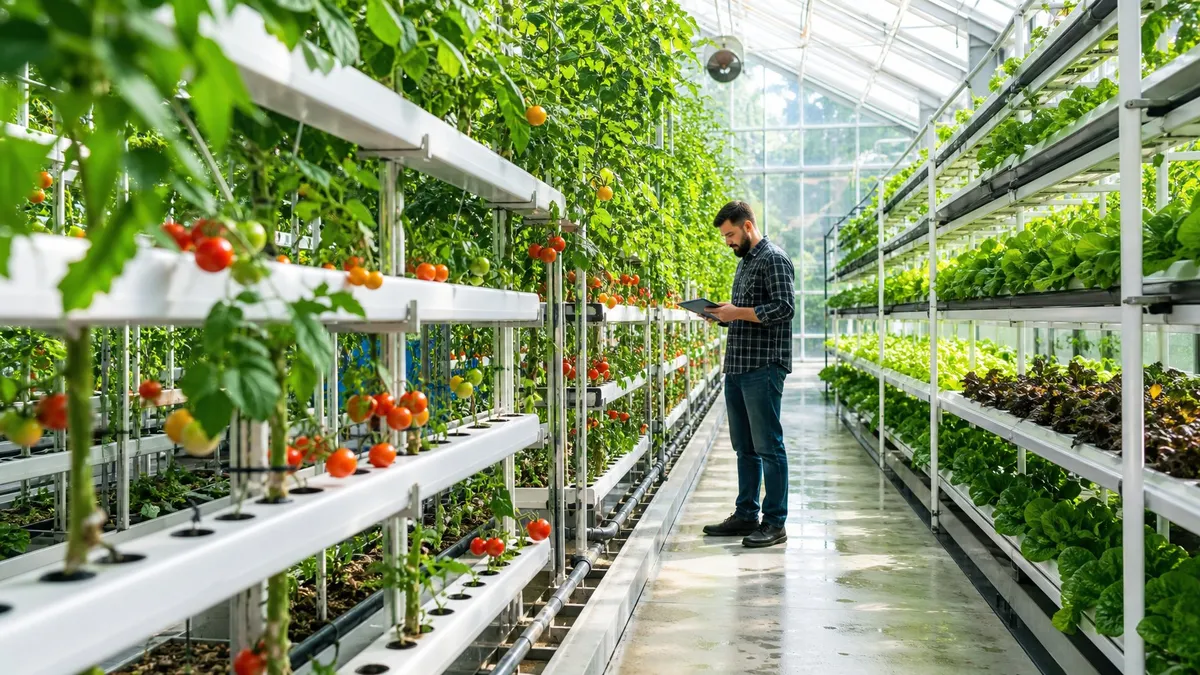
You do not need a bigger greenhouse to earn more. Yield optimization through better climate control, tighter spacing, faster crop rotation, and selective automation can boost your profit per square foot significantly within your existing structure. The key is treating every square foot as a revenue-generating asset and eliminating downtime.
Climate Management and Yield Stability
Consistent temperature, humidity, and airflow translate directly into consistent yields. Temperature swings stress plants, reduce fruit set, and increase disease risk. Ventilation openings should total 15% to 20% of floor area, with roof vents for hot air exhaust and side louvers for cool air intake.
Automatic vent openers ($25 to $80 each) maintain stable conditions without requiring you to monitor the greenhouse all day. For structures over 200 square feet or in hot climates, an exhaust fan sized at 1 CFM per square foot keeps temperatures in the productive range. Stable growing conditions can improve yields by double digits compared to greenhouses with wide temperature fluctuations.
Spacing, Rotation, and Succession Planning
Tight succession planting eliminates gaps between harvests. The day you pull out a finished lettuce crop, a tray of transplants should be ready to fill that space. Aim for zero empty bench space during the growing season.
Follow these spacing guidelines to maximize plant density without sacrificing yield:
- Lettuce and spinach: 1 sq ft per plant
- Herbs: 0.5 to 1 sq ft per plant
- Peppers: 2 to 3 sq ft per plant
- Tomatoes (indeterminate): 4 to 6 sq ft per plant
- Microgreens: 0.1 sq ft per tray
Interplanting fast crops (radishes, herbs) between slower crops (tomatoes, peppers) squeezes extra revenue from the same beds during the early weeks of a fruiting crop cycle.
Protected Production Methods That Raise Throughput
Hydroponics, deep water culture, and nutrient film technique (NFT) systems can increase yields per square foot compared to soil-based growing. Hydroponic lettuce farms routinely achieve higher output and faster cycles than soil systems.
Row covers and thermal blankets extend your productive season on both ends, letting you start earlier in spring and harvest later into fall. For cold-climate growers, these simple additions can stretch a 6-month outdoor season to 10 months inside an unheated greenhouse, a 67% improvement backed by University of Minnesota Extension research.
When Automation Improves Economics
Automation makes financial sense when it reduces labor costs enough to justify the investment. Automated timers for irrigation ($25 to $80) and climate controllers are low-cost, high-impact upgrades. Sensor-driven fertigation systems cost more but reduce nutrient waste and improve consistency.
At larger scales, automated seeding machines, transplanting systems, and harvest conveyors can reduce labor needs by 20% to 40%. Run the numbers before investing: if a $5,000 automation upgrade saves you 10 hours of labor per week at $18 per hour, it pays for itself in about six months. If your operation is smaller, focus on the low-cost automation tools first.
Sales Channels, Pricing Power, and Owner Take-Home Pay
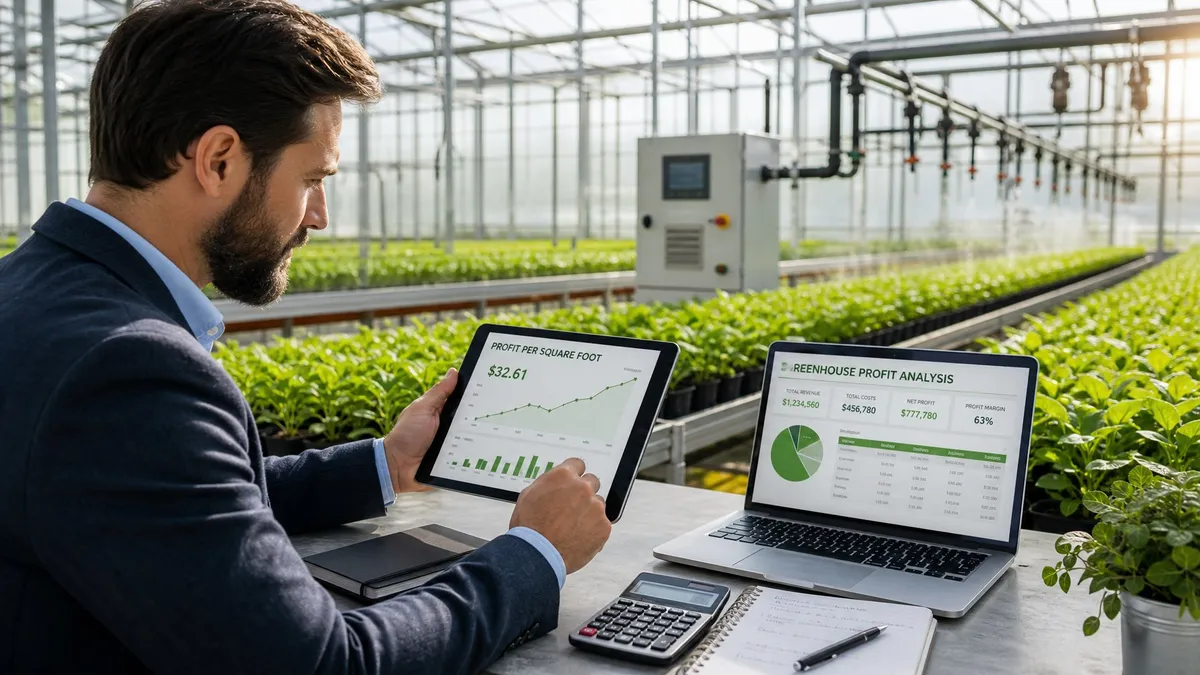
Where and how you sell your produce affects your profit per square foot just as much as what you grow. Direct-to-consumer channels typically yield 40% to 100% higher prices than wholesale, which means the same greenhouse can generate dramatically different income depending on your sales strategy. Pricing power, reinvestment decisions, and business structure determine how much money actually reaches your pocket.
Wholesale, Retail, and Restaurant Pricing Differences
Wholesale buyers (distributors, grocery chains) pay the lowest prices but buy in volume. Expect to receive 40% to 60% of retail price through wholesale channels. Restaurant accounts typically pay better than wholesale, often 70% to 85% of retail, and they value consistency and quality over rock-bottom pricing.
Direct retail (your own farm stand, online store) captures the full retail price. The trade-off is that you handle more logistics: marketing, packaging, customer service, and delivery. For small and mid-size greenhouse operations, a mix of channels usually works best. Anchor your revenue with one or two steady restaurant accounts, then sell surplus at farmers markets or through direct sales.
Farmers Markets, CSA Subscriptions, and Direct Sales
Farmers markets give you direct access to consumers who are willing to pay premium prices for locally grown, pesticide-free produce. Weekly market sales create a predictable revenue rhythm and let you test new crops with real buyers.
CSA (Community Supported Agriculture) subscriptions provide upfront cash flow. Members pay at the start of the season, giving you operating capital when you need it most. A well-run CSA also reduces waste because you know exactly how much to grow each week. Both channels reward the grower who builds relationships and shows up consistently.
How Reinvestment Changes Greenhouse Owner Income
Greenhouse owner income in the USA typically ranges from $40,000 to over $150,000 annually. But first-year take-home pay is often much lower because you are reinvesting profits into equipment, infrastructure, and growth.
Expect to reinvest heavily during years one through three. A common pattern is to take 30% to 50% of net profit as personal income and reinvest the rest. This approach shortens your payback period (typically 3 to 7 years for a greenhouse business) and builds a more profitable operation over time. Track your owner draw separately from business profit so you always know what the greenhouse is actually paying you.
When A Profitable Greenhouse Becomes A Real Business
A profitable greenhouse becomes a real business when it generates consistent income beyond your labor costs. If you are working 60 hours a week and earning $25,000, you have a demanding hobby, not a business.
The transition usually happens when you hit two milestones: your revenue covers all costs including a fair wage for your own labor, and you can step away for a week without production collapsing. Reaching these milestones requires systems, not just hard work. Written crop plans, documented processes, at least one trained helper, and reliable sales channels are the building blocks. At that point, your greenhouse profit per square foot is not just a metric; it is the foundation of a sustainable livelihood.
Frequently Asked Questions
What factors most affect net profit in a commercial greenhouse?
Crop selection, energy costs, labor efficiency, and sales channels have the biggest impact on net profit. Energy for heating and cooling can consume up to 30% of your operating budget, while labor typically accounts for 20% to 40%. Choosing high-value crops and selling direct-to-consumer rather than wholesale can shift your margins from 15% to well above 35%.
Which crops typically generate the highest revenue per unit area in a greenhouse?
Microgreens, specialty herbs like basil, and gourmet lettuces consistently produce the highest revenue per square foot due to their fast harvest cycles and premium pricing. Microgreens can turn over 17 to 36 times per year in stacked trays, generating far more annual income from the same floor space than slower-growing crops like tomatoes or peppers.
How do startup costs and operating expenses impact profitability for a small greenhouse?
Startup costs range from $10 to $25 per square foot for basic hoop houses to over $100 per square foot for high-tech glass structures. These upfront investments directly affect your breakeven timeline. Operating expenses, especially heating, lighting, and labor, determine your ongoing margins, so budgeting accurately for both is essential before you plant your first crop.
What is the typical payback period for building and equipping a 10,000 sq ft greenhouse?
Most greenhouse operations reach payback within 3 to 7 years, depending on crop value, efficiency, and sales strategy. A 10,000-square-foot greenhouse growing high-value crops with direct sales channels and efficient energy management can reach the shorter end of that range. Operations relying on wholesale pricing or growing lower-margin commodity crops typically take longer.
How do energy, heating, and lighting choices change overall greenhouse margins?
Switching from single-layer glass to 6mm twin-wall polycarbonate improves insulation from R-0.9 to R-1.6, reducing heating costs meaningfully. LED grow lights cost roughly $60 to $180 per year for a small greenhouse when run four hours daily in winter. Strategies like thermal mass, double-layer glazing, and frost-protection thermostats can cut heating bills by 20% to 40%, directly improving your bottom line.
What grants or funding programs are commonly available for starting a greenhouse business?
The USDA Specialty Crop Research Initiative, USDA Environmental Quality Incentives Program (EQIP), and various state-level agricultural grants support greenhouse projects. Many states also offer beginning farmer programs and low-interest agricultural loans. Check with your local USDA service center and state department of agriculture for current programs, as funding availability and application deadlines change each year.