
Sierra Greenhouse Insights
Electric Vs Propane Greenhouse Heater Choices
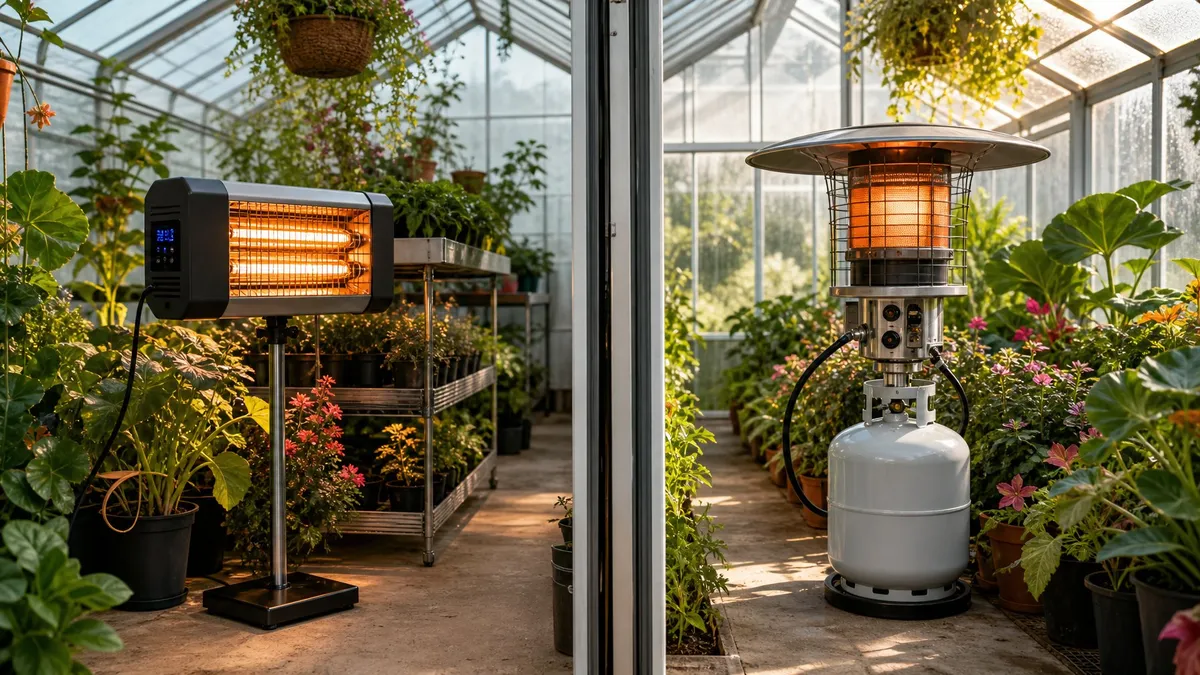
Choosing between an electric and propane greenhouse heater really depends on your greenhouse size, local energy rates, and just how much heat you need. Both can keep your plants alive in winter, but they're totally different beasts.
Electric heaters plug in, run clean, and let you dial in temps with surprising precision. Propane heaters crank out way more BTUs, work when the grid goes down, and might cost less per BTU if you're out in the country.
The best heater for you? That depends on your setup. A small, insulated greenhouse near an outlet tilts toward electric. Bigger or off-grid spaces? Propane often wins on practicality and price.
Your climate, insulation, growing goals, and budget all shift the equation.
Let's dig into what actually matters—performance, safety, cost, and which heater fits your greenhouse.
Key Takeaways
- Electric heaters are cleaner and simpler for small to mid-size greenhouses with grid power. Propane delivers more heat for bigger or off-grid spaces.
- Safety's a different story for each: electric units don't need venting, but propane setups require ventilation, CO detectors, and oxygen sensors.
- Your yearly heating bill is more about insulation, thermostat settings, and local energy costs than heater type alone.
Performance and Output: BTUs vs. Kilowatts
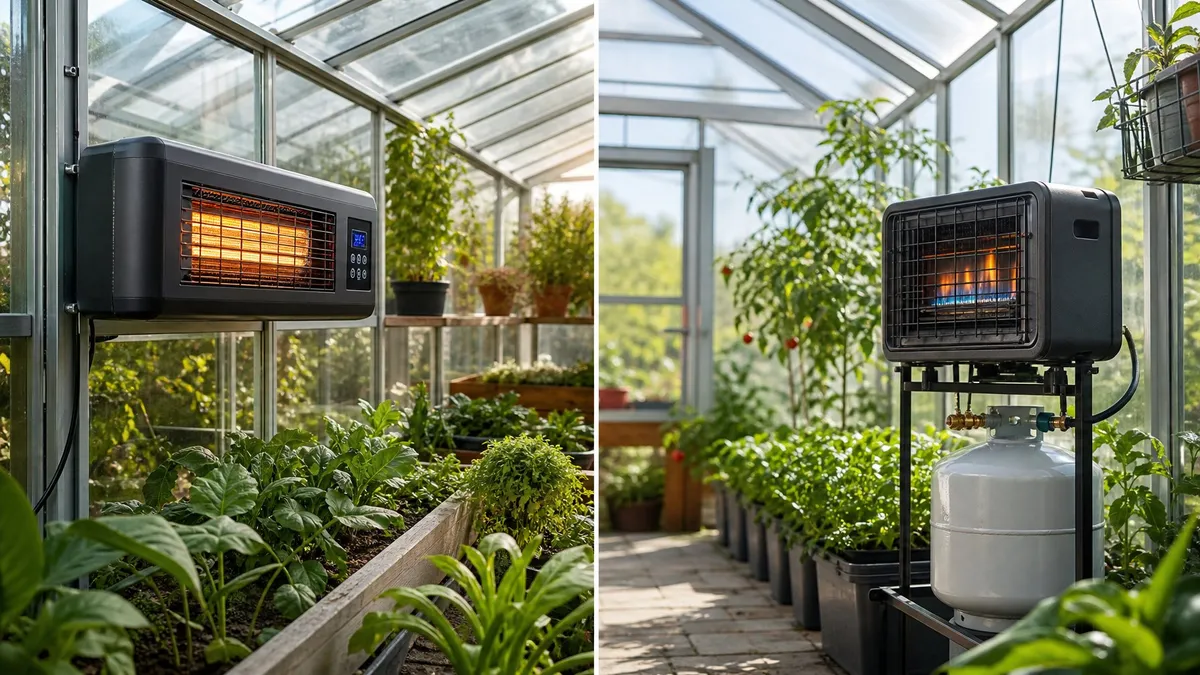
Heating power is usually measured in BTUs (British Thermal Units). For electric heaters, you'll see kilowatts (kW), where 1 kW equals about 3,412 BTUs.
How Much Heat Do You Actually Need?
Before picking a side, you need to know your "heat load." This is the total BTUs required to keep your greenhouse at a target temperature when it’s freezing outside.
A common mistake is buying a heater that’s too small. A standard 1,500-watt electric space heater only gives you about 5,000 BTUs. If you have a 10x12 greenhouse in a snowy climate, you might need 15,000 to 20,000 BTUs just to stay above 50°F.
The Raw Power of Propane
Propane heaters are the heavy hitters. A modest portable propane heater can kick out 10,000 to 30,000 BTUs. Larger, permanently installed units can go well over 60,000 BTUs.
If you’re trying to keep a large space truly warm—not just "above freezing"—propane has the raw output that electric units often struggle to match without expensive high-voltage wiring.
Precision Control with Electric
Where electric heaters win is precision. Most have built-in digital thermostats that can hold a temperature within a degree or two.
Propane heaters, especially the non-electric ones, often have simpler "High/Medium/Low" settings. This can lead to wider temperature swings, which some sensitive tropical plants don't appreciate.
Safety and Environmental Considerations
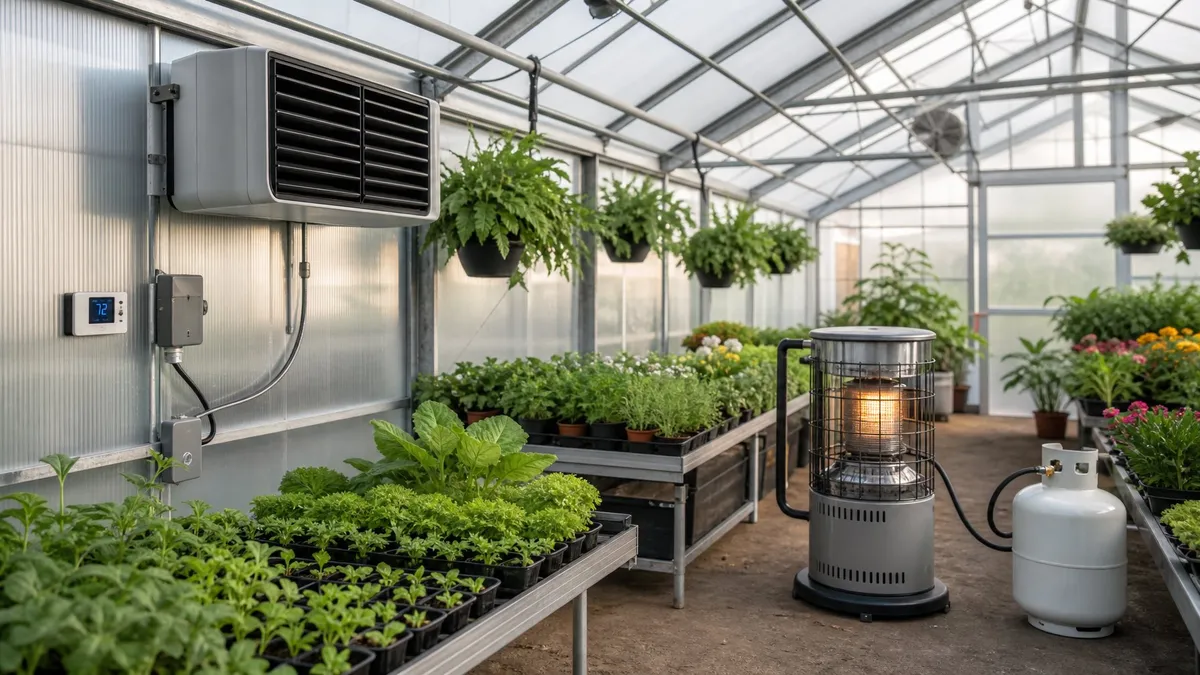
Safety is the biggest practical difference between these two systems. One is "set it and forget it," while the other requires constant vigilance.
Venting and Air Quality
Electric heaters are 100% clean at the point of use. They don't burn anything, so they don't produce exhaust. You can seal your greenhouse tight to hold in heat.
Propane is a combustion fuel. It produces carbon monoxide (CO), nitrogen dioxide, and a lot of water vapor.
- Vented Propane: These units have a pipe that carries exhaust outside. They're safer but more expensive to install.
- Unvented Propane: These are common in hobby greenhouses but require fresh air intake to prevent CO buildup.
Moisture and Humidity Levels
Combustion releases water vapor. If you use an unvented propane heater, your greenhouse humidity will spike. This is great for tropicals but a nightmare for mold prevention.
Electric heat is "dry" heat. It won't add moisture to the air, which helps keep fungal issues in check during the dampest winter months.
The Risk of Power Outages
This is the "Achilles' heel" of electric heating. If a winter storm knocks out your power, your electric heater is just a paperweight. Your plants could freeze in hours.
A non-electric propane heater works regardless of the grid. For many growers in rural areas, this "survival insurance" is the primary reason they choose propane.
Installation and Infrastructure Costs
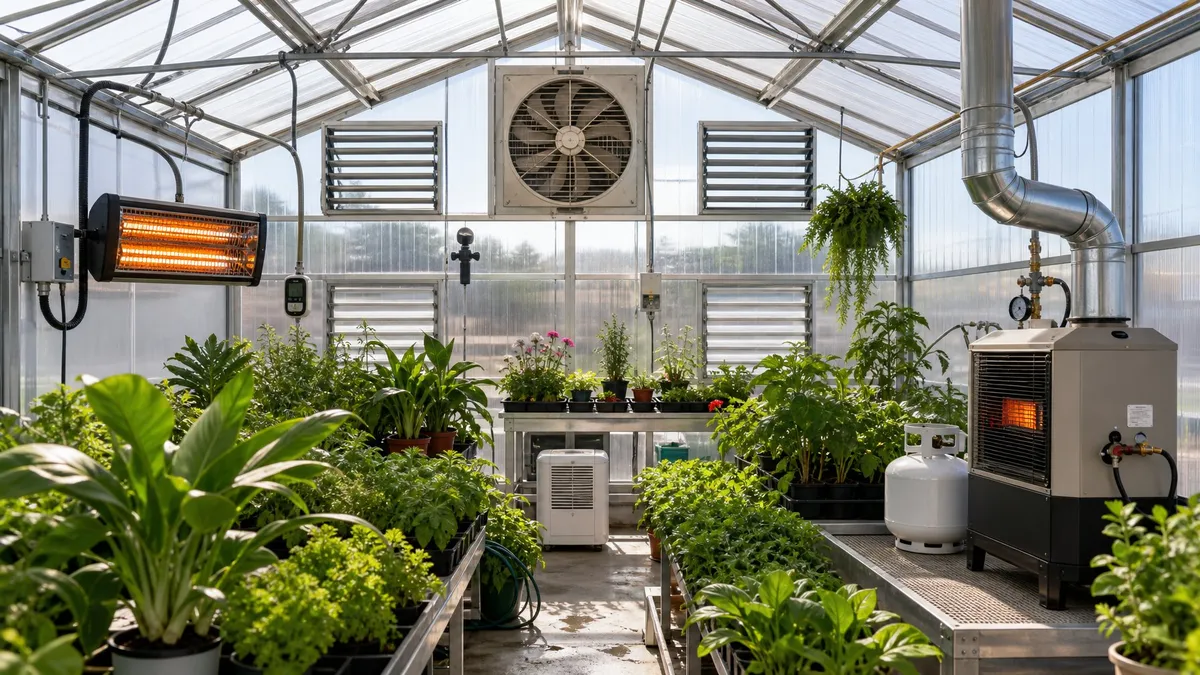
The price on the box is only part of the story. You have to get the energy to the heater.
Wiring for Electric Heat
Most standard greenhouse heaters are 240V. If you only have a standard 120V outlet, you're limited to about 5,000 BTUs.
To get real heating power, you’ll likely need an electrician to run a dedicated 240V line to your greenhouse. This can cost anywhere from $300 to $1,500 depending on the distance from your main panel.
Plumbing for Propane
For propane, you have two choices:
- Portable Tanks: Using 20lb "BBQ" tanks. It’s cheap to start but a pain to swap them out every few days in a cold snap.
- Bulk Tanks: A large 100-500 gallon tank leased from a local supplier. You'll need a gas line run to the greenhouse, which usually requires a permit and professional installation.
Ongoing Operating Costs: Electricity vs. Fuel
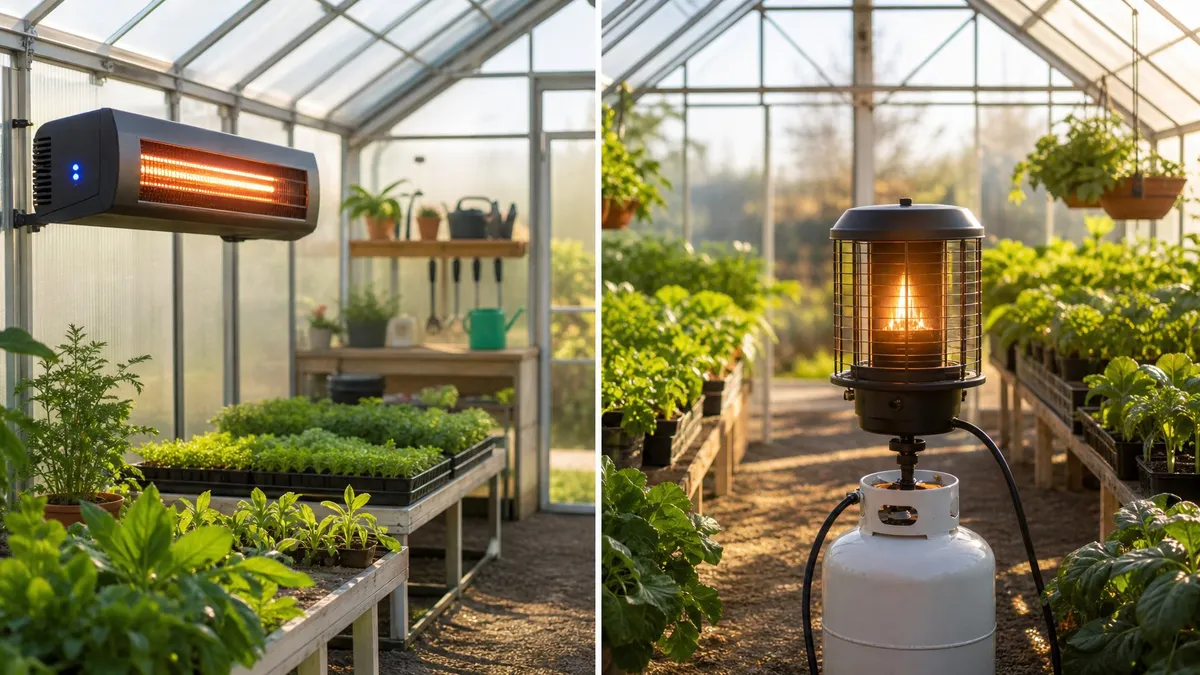
This is where the math gets tricky, as it depends entirely on your local rates.
The Efficiency Gap
Electric heaters are technically 100% efficient—every bit of energy they pull from the wall becomes heat.
Propane heaters range from 80% (older vented units) to 99% (newer unvented units). Some heat is always lost through the vent pipe or due to incomplete combustion.
Price Per BTU
In most parts of North America, electricity is the more expensive way to move a BTU of heat. However, if you have solar panels with battery storage, or live in a region with very cheap hydro-power, electric can actually be cheaper.
Propane prices fluctuate with the oil market. If you buy in bulk during the summer, you can often lock in a rate that makes propane significantly cheaper than the local electric utility.
Comparison Table: At a Glance
| Feature | Electric Heater | Propane Heater | | :--------------- | :--------------------------- | :----------------------- | | Initial Cost | Low (if outlet exists) | Moderate to High | | Max Output | Moderate (limited by wiring) | Very High | | Air Quality | Perfect | Requires Venting/Sensors | | Maintenance | Minimal | Annual Cleaning Required | | Reliability | Fails in Power Outage | Works Off-Grid | | Control | Highly Precise | Basic to Moderate |
Best Use Cases for Each Heater Type
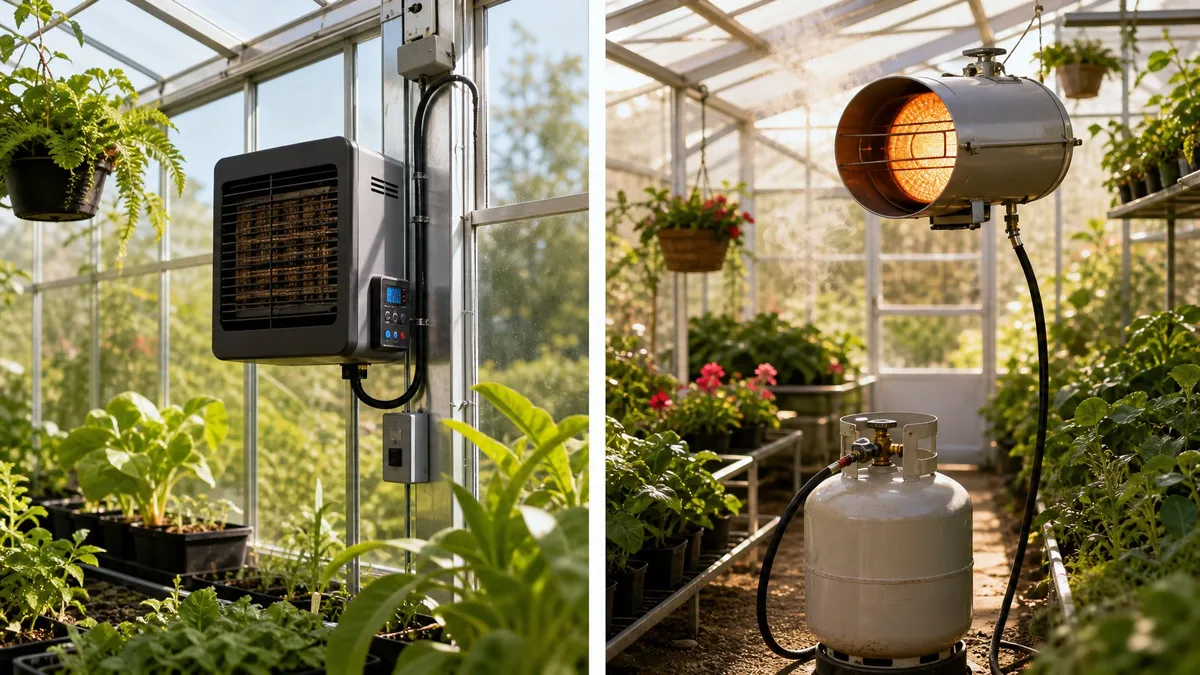
When to Choose Electric
- Small Greenhouses (under 100 sq ft): The heat load is low enough that a standard outlet might suffice.
- "Shoulder Season" Growing: If you only need to take the edge off a chilly spring night.
- High-Value Seedlings: Where precision temperature control is worth the extra operating cost.
- Attached Greenhouses: Where air quality and noise are major concerns.
When to Choose Propane
- Large Greenhouses (over 200 sq ft): Where the cost of high-voltage wiring becomes prohibitive.
- Off-Grid or Remote Sites: No power? No problem.
- Extreme Cold Climates: Where you need 50,000+ BTUs to keep the space from freezing.
- Commercial Production: Where the lower cost per BTU significantly impacts the bottom line.
Maintenance and Longevity
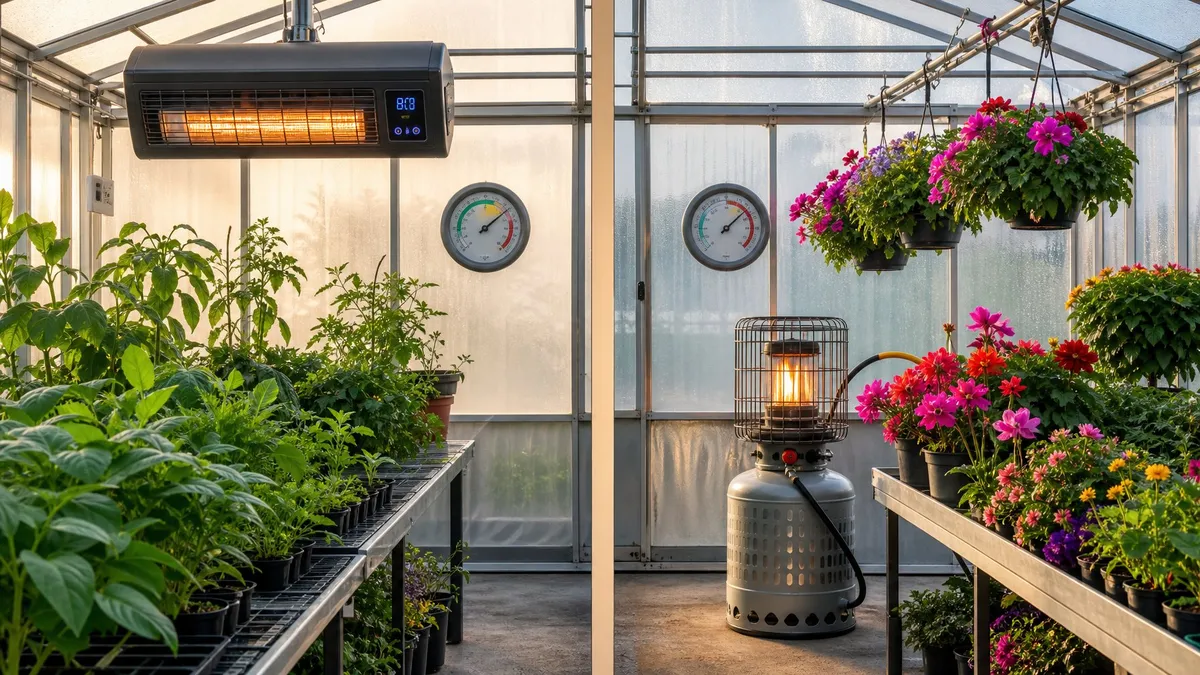
Electric Maintenance: Keep it Dust-Free
Electric heaters have very few moving parts—usually just a fan and a heating element. The main job is keeping them clean. Dust buildup in a humid greenhouse can lead to shorts or even fire hazards. Blow out the unit with compressed air once a month.
Propane Maintenance: Burner and Safety Checks
Propane units are more complex. You need to check the pilot light, the thermocouple, and the burner ports for any clogs (spiders love propane orifices!).
Most importantly, you must test your carbon monoxide and oxygen depletion sensors every single season. A failure here can be deadly.
Frequently Asked Questions
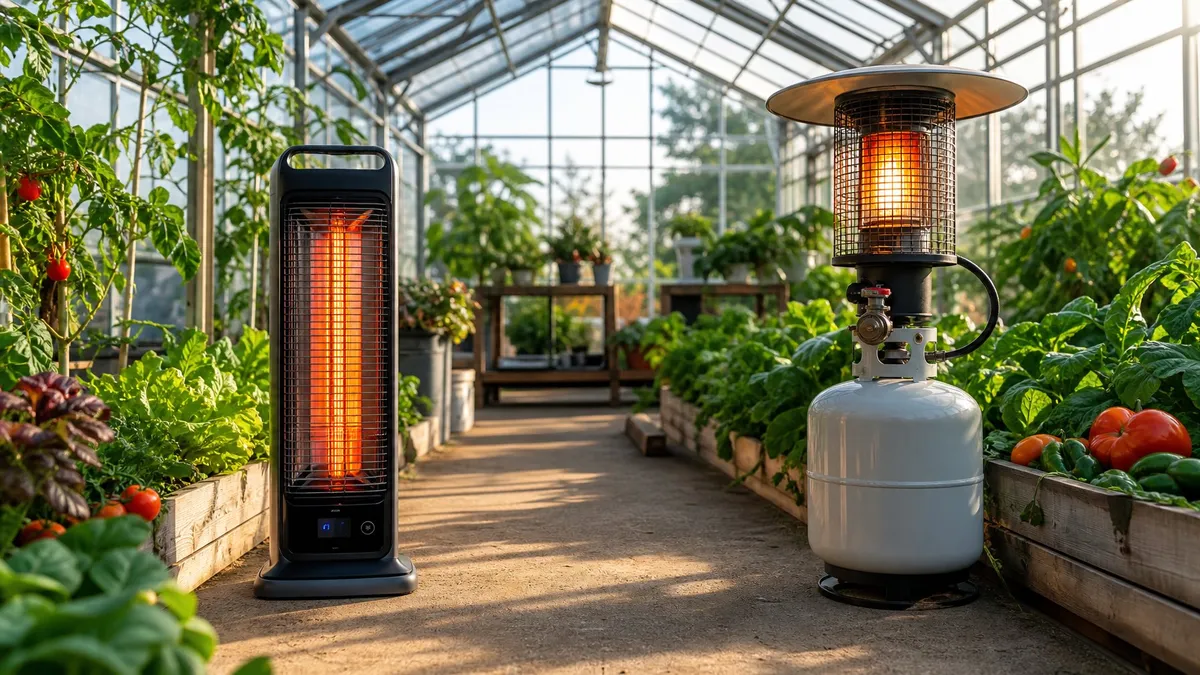
Is it safe to leave a propane heater on overnight in a greenhouse?
Yes, provided it is either properly vented or equipped with an Oxygen Depletion Sensor (ODS) and you have a separate battery-operated CO detector. Never use a standard "indoor" propane heater without these safety features in a closed greenhouse.
Can I run a greenhouse heater on a standard extension cord?
For electric heaters, the answer is almost always no. Most heaters pull 12.5 to 15 amps. A standard extension cord will overheat, melt, and could cause a fire. If you must use a cord, it needs to be a heavy-duty 10-gauge or 12-gauge "appliance" cord, and it should be as short as possible.
Which heater type is better for preventing greenhouse mold?
Electric heaters are superior for mold prevention because they provide "dry" heat. Propane combustion releases water vapor, which increases humidity and encourages fungal growth unless you have excellent ventilation.
Do I need a permit to install a propane heater in my greenhouse?
If you are connecting to a permanent bulk tank or running a gas line through a wall, the answer is usually yes. Check with your local building department. Portable "tank-top" heaters generally do not require permits.
Can I use solar power to run an electric greenhouse heater?
Technically yes, but practically it is very difficult. A 1,500W heater running for 12 hours would require a massive (and very expensive) battery bank. Solar is great for fans and lights, but for heavy-duty heating, the grid or propane are much more realistic.