
Sierra Greenhouse Insights
Greenhouse Saffron Growing for Home Gardeners
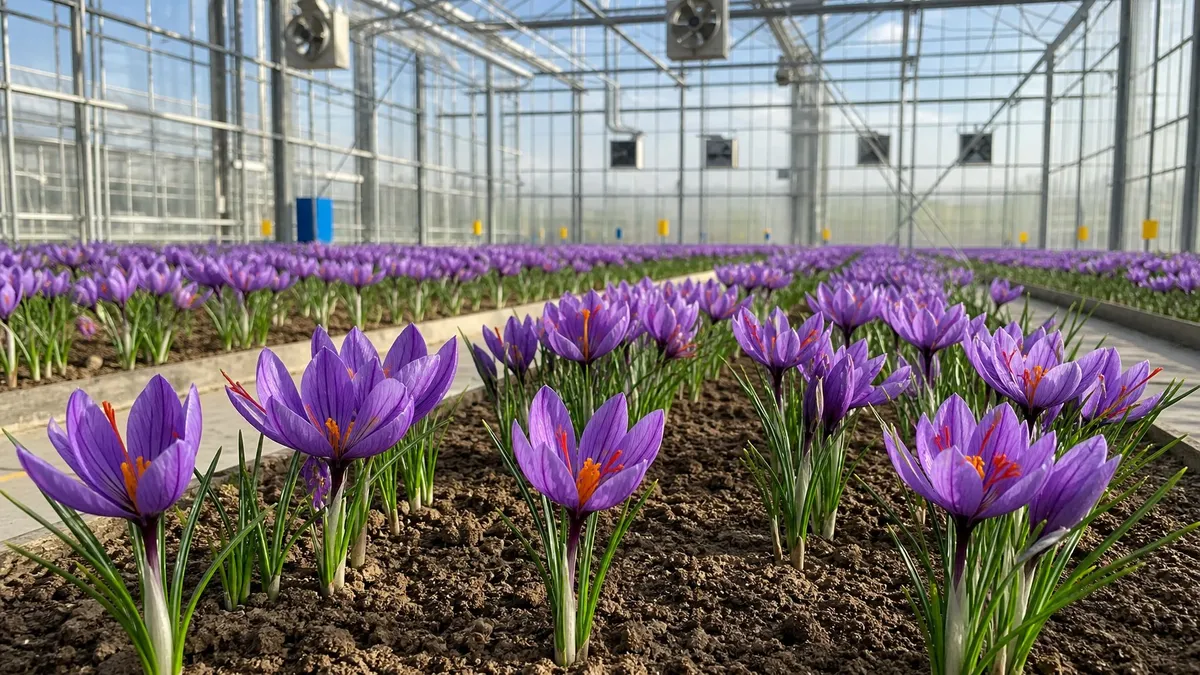
Saffron holds the title for the world’s most expensive spice, but you can actually grow it yourself in your own greenhouse. A single ounce of dried saffron threads can sell for $10 to $30, sometimes even more.
The plant itself? Surprisingly easy to care for, as long as you get to know its quirks. Greenhouse saffron growing gives you a lot of control—temperature swings, moisture, drainage—all the things this finicky crop demands, especially if you live outside USDA zones 6 through 9.
Growing saffron at home in a greenhouse means you can shield those delicate fall blooms from rain, frost, and wind. You can also manage the dry summer dormancy the corms need for good flowering.
The basic process is simple: plant corms in late summer, keep them dry during dormancy, give them cool fall temps, harvest the crimson stigmas by hand, and dry them within a few hours. The details—soil mix, airflow, all the little things—make the difference between a great harvest and a flop.
Maybe you’re thinking of a small tray with 50 corms for your own kitchen. Or maybe you want a few hundred for gifts or local sales. Either way, a home greenhouse is one of the best bets for reliable saffron year after year.
The next sections walk you through corm selection, planting timing, environmental controls, harvesting, and what kind of yields to expect. That way, you can figure out if saffron fits in your garden plans.
Key Takeaways
- Saffron crocus loves greenhouses because you control dry dormancy, cool fall temps, and fast drainage—exactly what it wants.
- Each corm gives you just three saffron threads per bloom. You'll need at least 50 to 150 corms for a harvest worth your time.
- Overwatering and poor drainage ruin most home saffron attempts. Corms rot fast if they get soggy.
Is Saffron A Good Fit for Your Greenhouse?
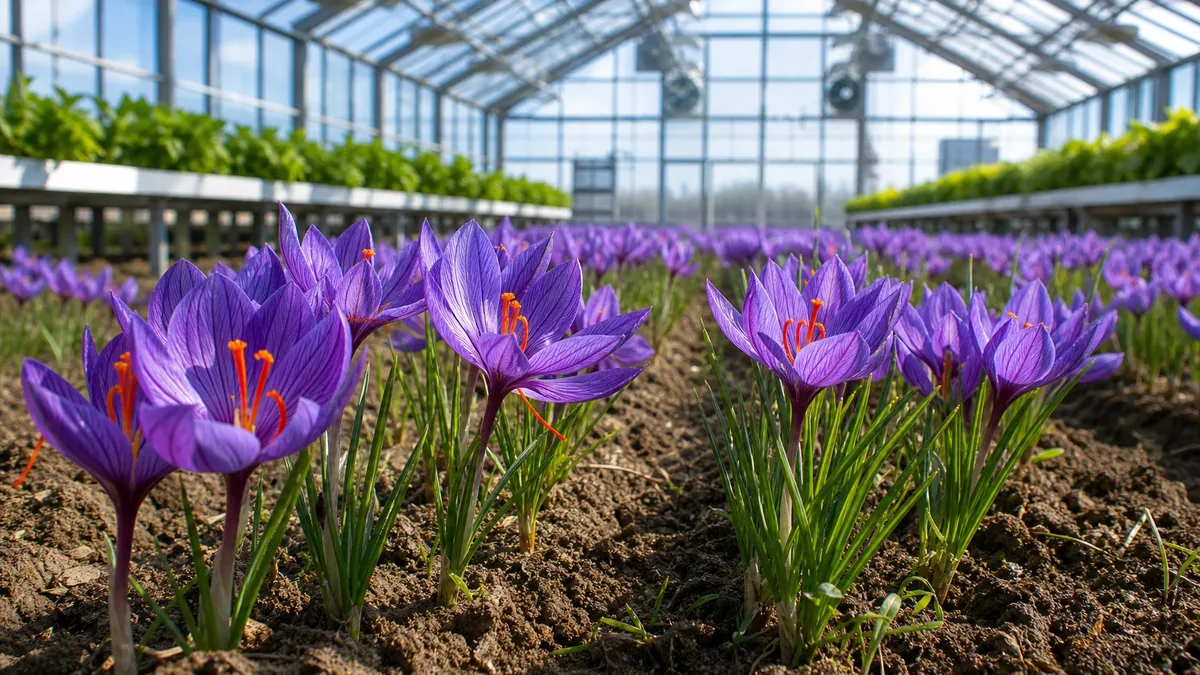
Saffron crocus (Crocus sativus) isn’t your typical greenhouse plant. It needs a hot, dry summer dormancy, then cool autumn to flower—a total flip from most crops you might grow.
What sets this plant apart? And when does a greenhouse actually help? Let’s dig in.
What Makes Crocus sativus Different From Other Greenhouse Crops
Saffron doesn’t want steady warmth or regular watering year-round. Crocus sativus is a fall-blooming perennial that goes completely dormant in summer.
During dormancy, the corms need to stay dry and warm—think 73 to 77°F—for several weeks. Then, as autumn hits, they crave a drop to around 50 to 60°F to trigger sprouting and flowering.
The plant only reproduces by corm division, never by seed. Each flower gives you just three red stigmas, which are the saffron threads everyone’s after.
You’ll need a lot of corms for even a modest harvest. Saffron’s been around for over 3,500 years, and Iranian saffron still dominates the global market. The plant itself hasn’t changed: low water, high drainage, and a need for patience.
When a Greenhouse Helps More Than Outdoor Beds
A greenhouse really shines if you live somewhere with wet falls, very cold winters (USDA 3–5), or heavy autumn rain. Saffron flowers are fragile—one hard rain can flatten them and ruin your harvest.
Inside a greenhouse, you control moisture. That’s huge.
If you’re in a hot, humid place like the Gulf Coast, outdoor soil stays way too wet for dormant corms. The controlled environment lets you mimic the dry Mediterranean summer that saffron evolved in, even if your climate is nothing like that.
Common Limitations Before You Start
Don’t expect to make a fortune in a small greenhouse. Each flower produces about 0.006 grams of dried saffron. You’d need about 150 flowers for just one gram.
The work is all by hand, and the harvest window is short—usually just 15 to 20 days in fall. You also can’t skip dormancy. If corms stay cool and moist in summer, they may not flower at all.
Crocus sativus is sterile, so you’ll need to buy new corms or wait for yours to multiply, which takes a full cycle. Be realistic about your scale before you invest.
Choosing Corms, Containers, and Planting Media
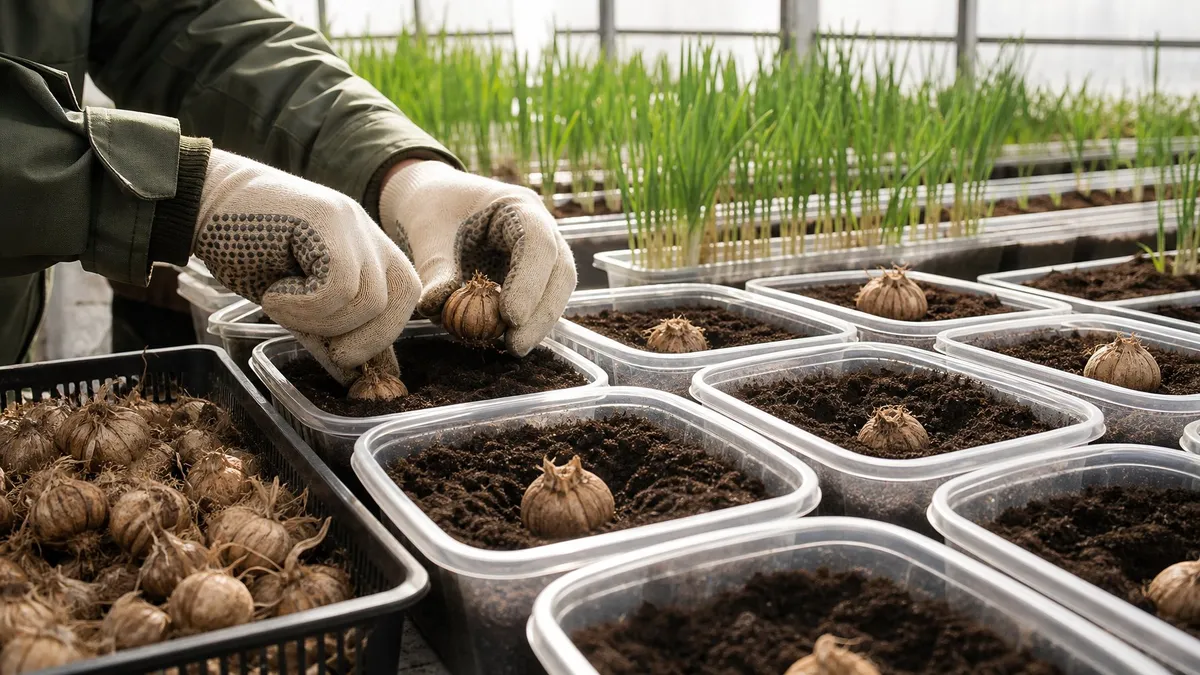
Your saffron success starts before you even plant. Healthy saffron corms, the right containers, and a fast-draining soil mix matter more than any fancy setup.
How to Select Healthy Saffron Corms
Buy corms (sometimes called bulbs, but technically corms) from a reputable supplier who knows Crocus sativus. Go for corms that are firm, plump, and at least 2.5 to 3 centimeters (about 1 inch) across.
Bigger corms—8 to 10 grams—give you more flowers the first season. Skip any that feel soft, smell musty, or show mold. Those are already halfway to rotten.
Fresh corms with about 40% to 55% moisture perform best. If you can, buy from a grower who ships in late summer so you can plant right away.
Beds vs. Pots vs. Raised Benches
You’ve got options: ground beds, pots, or raised benches. Each has its quirks.
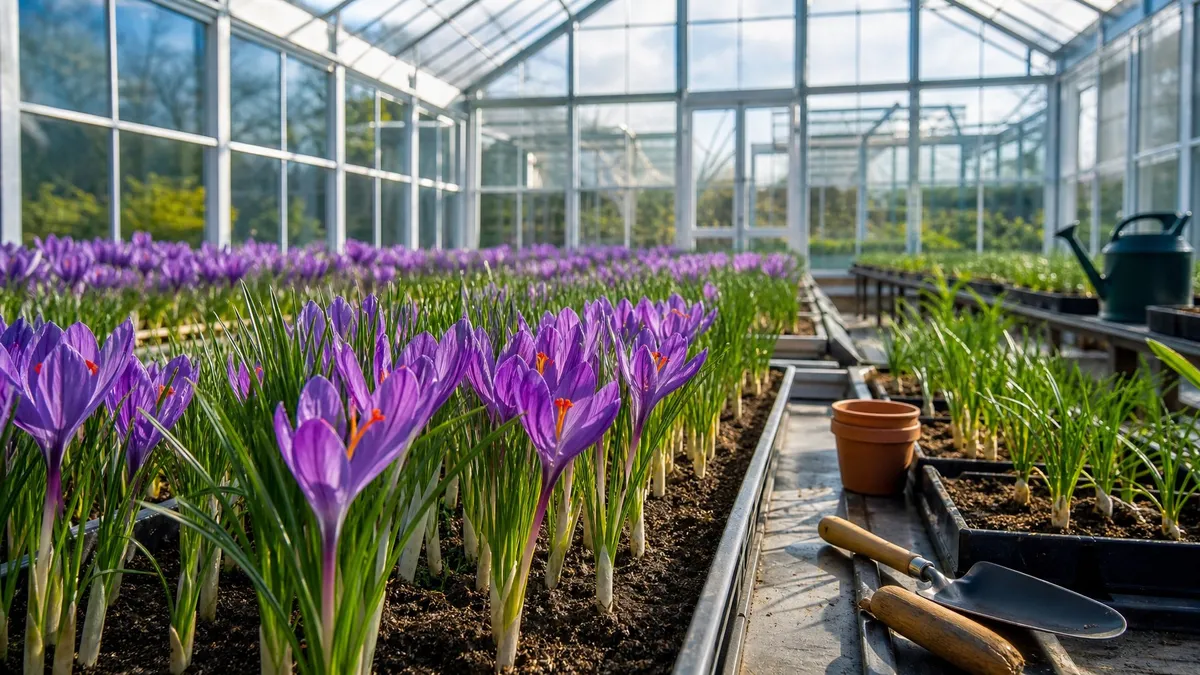
- Pots and trays are great for smaller plantings—say, 50 to 150 corms. Use containers at least 6 inches deep with drainage holes. They're easy to move during dormancy.
- Raised benches with shallow trays let you pack more corms into your space and keep them off the cold floor. This setup improves airflow.
- In-ground beds work if your greenhouse drains really well. They’re harder to dry out for dormancy since you can’t just move the soil.
Most home growers find pots or bench trays easiest to manage.
The Best Soil Mix for Fast Drainage
Saffron corms hate wet feet. Your mix needs to drain fast but still feed the roots.
Try this:
- 50% sandy loam or coarse garden soil
- 30% coarse perlite or pumice
- 20% well-aged compost
Aim for soil pH between 6.0 and 7.5. Avoid peat-heavy mixes—they hold too much water. If you squeeze a handful after watering and water runs out, that’s good. If it sticks together like a mud pie, add more perlite.
Planting and Seasonal Timing
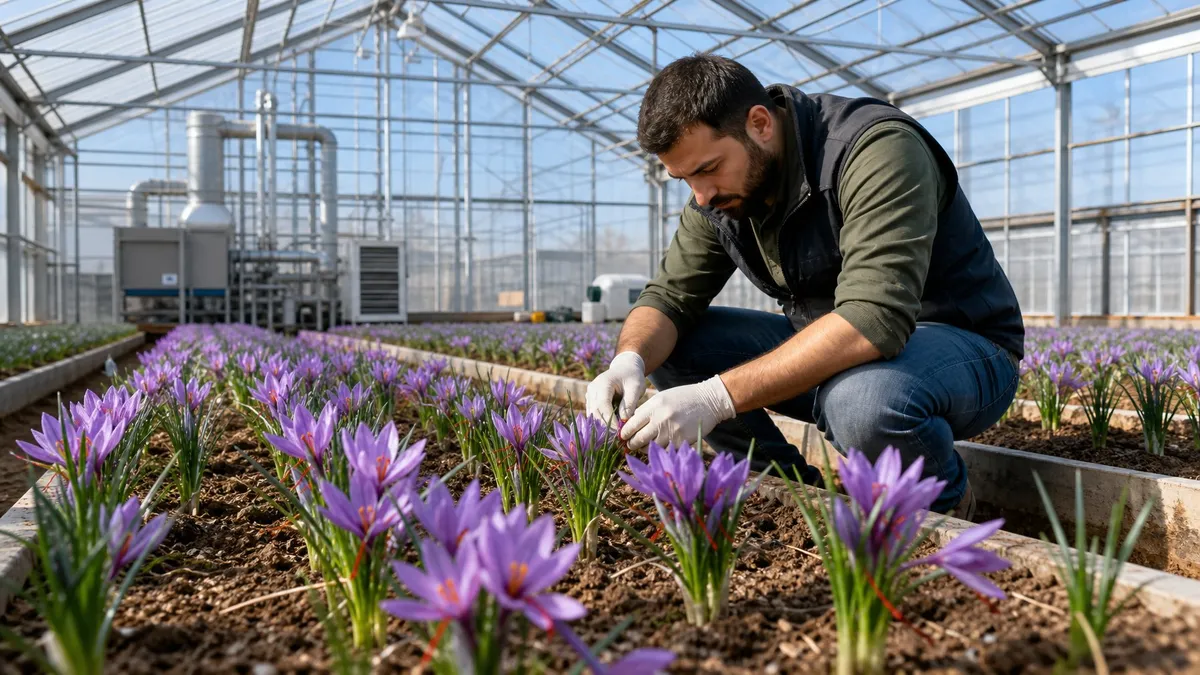
Timing is everything with saffron. Plant too late, and you miss the fall bloom. Plant too shallow, and the corms dry out. The dormancy, sprouting, and flowering cycle follows a pretty strict rhythm.
When to Plant for Fall Bloom
Plant saffron corms from late August to mid-September for most North American growers. This gives them 6 to 8 weeks to root before flowering in October or November.
If you’re in USDA zones 3 to 5 and using a greenhouse, you get some wiggle room since you control the temperature. Still, try to finish planting by late September. Corms planted after early October might not flower until the next year.
Clean out the greenhouse before planting. Remove old debris to cut down on fungal risks.
Depth, Spacing, and Layout Basics
Plant each corm pointy end up, 3 to 4 inches deep from the soil surface. Space them 3 to 4 inches apart all around.
In containers, you can squeeze them a bit closer—2 to 3 inches apart—since you can control conditions. A 12-inch pot fits about 8 to 12 corms. In raised beds or trays, arrange them in a grid to make harvest less of a pain.
Don’t plant too shallow. Corms less than 2 inches deep dry out and won’t multiply well.
Dormancy, Sprouting, and Flowering Cycle
Here’s the basic saffron rhythm:
- Summer dormancy (June–August): Corms rest in warm, dry conditions. Keep them at 73 to 77°F and don’t water.
- Planting and rooting (late August–September): Plant corms and start light watering only after you see green shoots.
- Flowering (October–November): Purple blooms open over 2 to 3 weeks. Each flower lasts just a day or two.
- Leaf growth (November–April): After blooming, grass-like leaves grow through winter and early spring. The plant feeds the new corm during this time.
- Foliage die-back (May–June): Leaves yellow and dry up. Stop watering and let the corms go dormant.
Knowing this cycle makes all the difference if you want to grow saffron year after year.
Managing Light, Temperature, Water, and Airflow
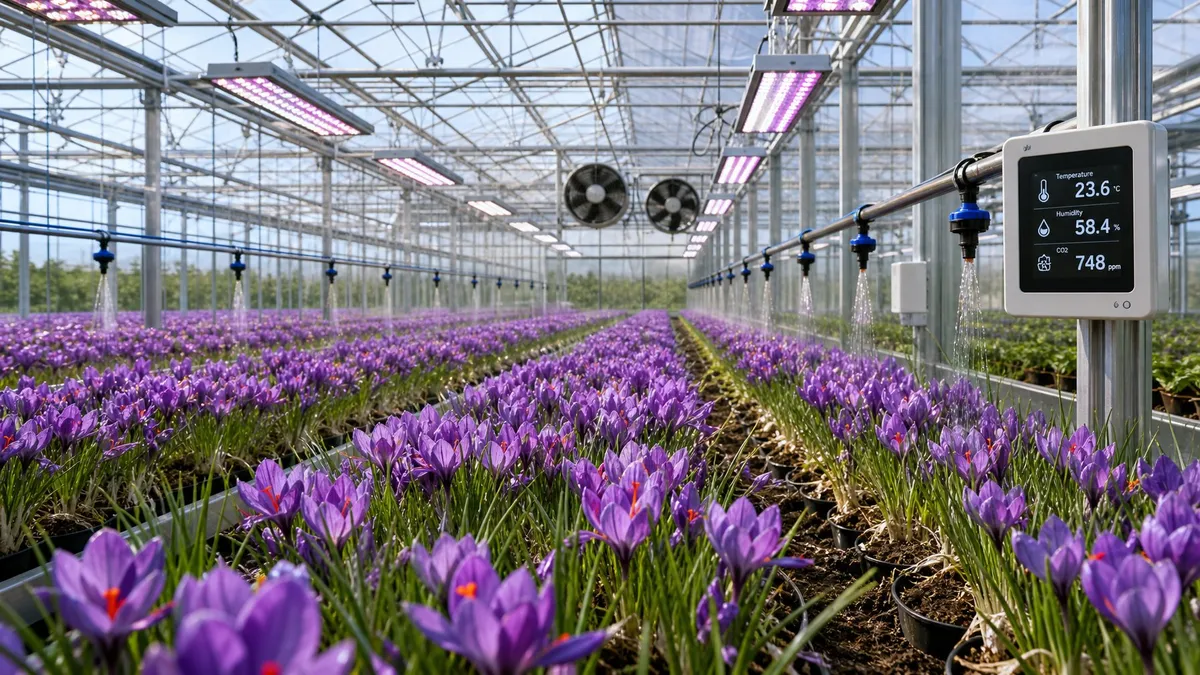
Saffron doesn’t want the warm, humid air most greenhouse crops love. It likes dry air, cool nights, and bright (but not blazing) light. If you get the environment wrong—especially by overwatering—you’ll lose your whole crop fast.
The Dry Conditions Saffron Prefers
Saffron evolved in semi-arid climates. In your greenhouse, aim for daytime temps of 50 to 70°F during fall growing and flowering. Nights between 40 and 55°F help trigger blooms.
During summer dormancy, corms need warmth (73 to 77°F) and zero water. If your greenhouse bakes in summer, move potted corms to a shaded, ventilated spot or even an indoor closet. Keep humidity between 45% and 55% during the growing season. Higher than that, and you’re asking for fungal trouble.
How Much Water Is Too Much
Here’s where most folks mess up. Saffron corms want very little water, and none at all during dormancy.
After planting in late summer, don’t water until you see green shoots—usually early to mid-October. Once they sprout, water just enough to keep the soil barely moist. Let the top inch dry out before watering again.
During flowering, water sparingly every 7 to 10 days. When leaves are growing through winter, stretch it to every 10 to 14 days. Once leaves start to yellow in late spring, stop watering entirely.
If you’re not sure, go drier. A cheap moisture meter (about $10 to $25, as recommended by Sierra Greenhouse) can save you a lot of guesswork, especially with containers.
Ventilation and Humidity Control to Prevent Rot
Good airflow is crucial for healthy saffron. Stagnant, humid air around the corms invites Fusarium rot and other fungal nightmares that can wipe out your crop in no time.
Keep greenhouse vents open during mild fall days to let air move freely. If you have an exhaust fan, turn it on after watering to keep humidity in check.
Automatic vent openers, which usually run $25 to $80 each, are honestly worth it for steady conditions. You don’t want to babysit vents all day.
Skip misting or overhead watering entirely. Water only at the soil level, ideally in the morning, so any moisture on the surface dries before night.
If you spot white or gray mold on corms or soil, crank up the airflow right away and cut back on watering.
Harvesting, Drying, and Storing the Spice
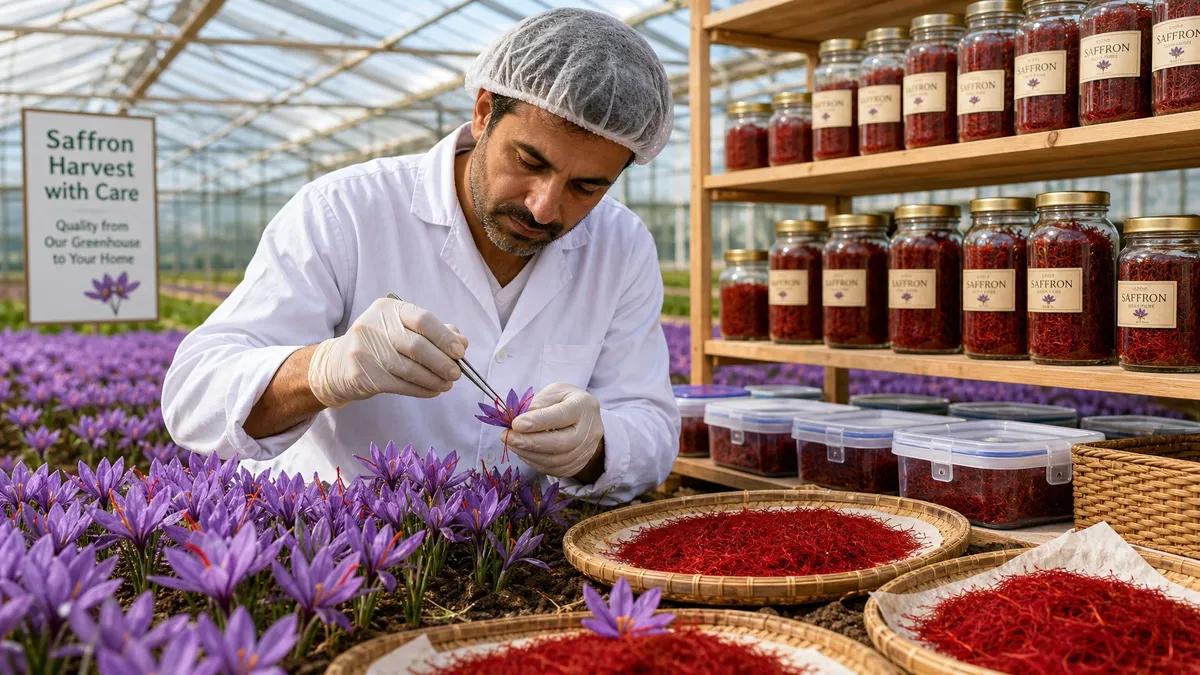
Harvesting saffron is easily the most exciting—and stressful—part of the whole process. You get just a short window to pick each flower, separate the stigmas, and dry them right.
If you rush or drag your feet, the flavor, color, and potency of your saffron will suffer. No pressure, right?
When Flowers Open and How Fast to Pick
Saffron flowers open in the morning. You really need to harvest them the same day they appear.
Once a bloom fully opens, the stigmas start losing their punch if left out in the light and air. In a greenhouse, expect flowers to pop up over 15 to 20 days, usually starting mid to late October.
Check your plants every morning during bloom season. Gently pinch or snip the stem at the base to pick the whole flower.
Place flowers in a dry basket or tray—don’t stack them or leave them baking in the sun before processing.
How to Separate and Dry Saffron Threads
After picking, separate the three red stigmas (the actual saffron threads) from each flower. Use your fingers or tweezers.
Toss out the petals and yellow stamens; only the deep red threads matter in the kitchen.
Dry the threads right away. Lay them out in a single layer on a paper towel, a parchment-lined tray, or a mesh screen.
Put them in a warm, dry spot with good airflow, ideally between 100 and 120°F. A food dehydrator on low works great.
If you don’t have a dehydrator, you can air dry them in a dry room, but that takes 24 to 48 hours instead of 15 to 20 minutes.
You’ll know they’re ready when the threads get brittle and snap cleanly.
How to Store Saffron for Best Flavor
Store dried saffron threads in an airtight glass jar or a little metal tin, away from light and heat. A dark cabinet or pantry shelf is perfect.
Dried saffron keeps its best flavor for about 2 to 3 years, though you can use it for longer. Don’t grind it until you’re ready to cook, since whole threads hold up better than powder.
Label each jar with the harvest date so you can use the oldest first.
Mistakes, Costs, and Yield Expectations
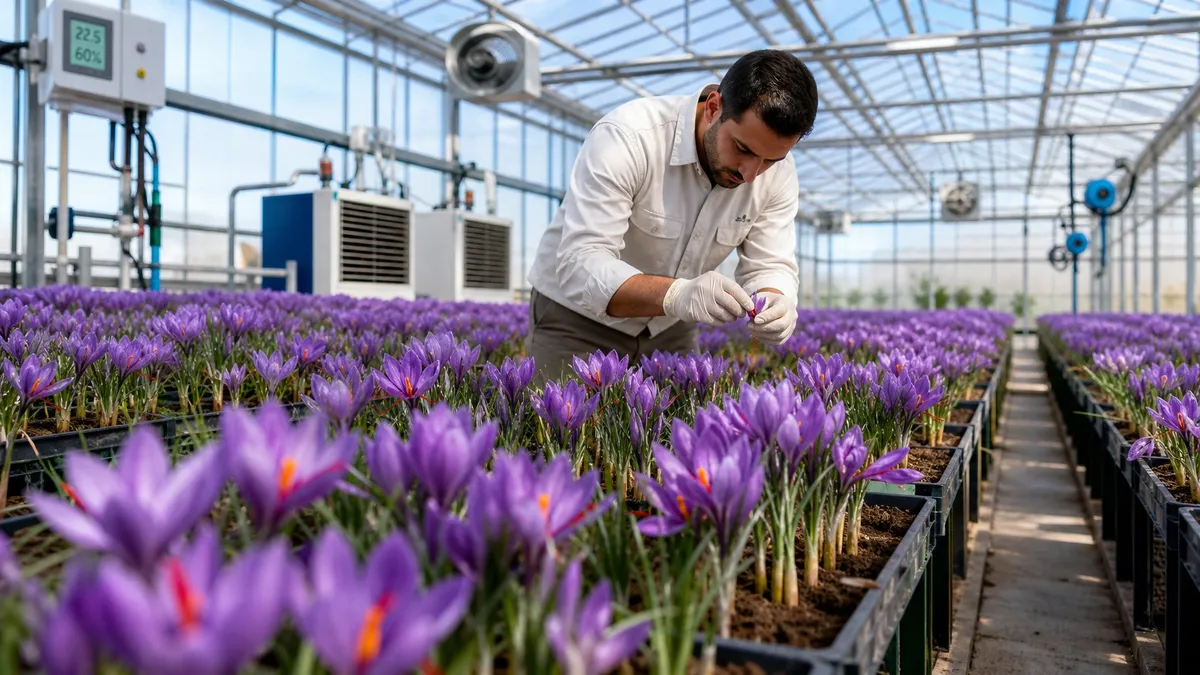
Growing saffron in a greenhouse isn’t complicated once you know the basics, but a single mistake can ruin your harvest. It helps to have a realistic idea of what you’ll get out of it, and what it might cost.
The Most Common Failure Points in Home Setups
Overwatering kills more saffron corms than anything else. If your soil stays wet for more than a day or two, the corms will rot before they even sprout.
Poor drainage in containers without enough holes is a close second.
Other common mistakes:
- Planting corms too late (after early October)
- Skipping the dry summer dormancy
- Using heavy, clay soil that stays soggy
- Letting greenhouse humidity stay above 60% during growth
- Starting with small, weak corms that don’t have the energy to flower
You can avoid most of these problems with the right soil mix, careful watering, and solid environmental controls.
What to Expect From a Small Greenhouse Planting
A typical small setup is 100 to 200 corms. Here’s what that actually looks like:
| Detail | 100 Corms | 200 Corms | | ----------------------------- | --------------- | --------------- | | Corm cost | $25–$50 | $50–$100 | | Space needed | ~4 sq ft | ~8 sq ft | | Expected flowers (Year 1) | 60–80 | 120–160 | | Dried saffron yield | ~0.4–0.5 grams | ~0.8–1.0 grams | | Retail value of harvest | $5–$15 | $10–$30 |
Year one yields are pretty modest. By year two or three, each corm usually multiplies into two or three, so your harvest can double or triple with no extra buying.
The real reward comes from patience and letting your corms multiply—not from a single season.
Soil, containers, and greenhouse supplies might add another $20 to $75, depending on what you already have lying around.
Whether Hydroponic or Aeroponic Methods Are Worth It
Some commercial growers experiment with hydroponic trays or aeroponic misting for saffron. Technically, these methods can work, but for a home grower, they’re usually more trouble and expense than they’re worth.
Aeroponic setups need precise nutrients, careful pH, and special racks. They’re really meant for big vertical farms, not your backyard greenhouse.
For most home growers, stick to containers with well-drained soil. It’s simple, reliable, and much less of a headache.
Frequently Asked Questions
What temperature and humidity range produces the best saffron flowers in a controlled environment?
Aim for daytime temperatures of 50 to 70°F, and nights between 40 and 55°F during flowering. Keep humidity between 45% and 55%—enough for growth, but low enough to avoid rot.
What is the ideal planting depth and spacing for saffron corms in raised beds or containers?
Plant each corm 3 to 4 inches deep, pointed end up. In beds, space them 3 to 4 inches apart; in containers, you can go a little tighter—2 to 3 inches apart.
How often should saffron be watered indoors, and how do you prevent corm rot?
Don’t water at all during summer dormancy or before green shoots show up in fall. Once they sprout, water lightly every 7 to 14 days, letting the top inch of soil dry out between waterings.
Always water at soil level, never from above.
What soil or growing medium works best for saffron, and what pH should it be?
Mix 50% sandy loam, 30% coarse perlite or pumice, and 20% aged compost for fast drainage. Aim for a soil pH between 6.0 and 7.5.
What lighting schedule is needed for saffron to flower when grown indoors?
Saffron loves natural greenhouse light. Give it 6 to 8 hours of bright, indirect to full sunlight daily during active growth.
Supplemental LEDs aren’t usually necessary unless your greenhouse is really dark in winter.
How profitable is producing saffron on a small scale, and what yields can be expected per season?
If you plant 200 corms, you’ll probably get around 0.8 to 1.0 grams of dried saffron in that first year. That’s worth somewhere between $10 and $30 if you sell it at retail.
Honestly, small-scale saffron growing feels more like a satisfying hobby than a real way to make money. Still, if you keep at it for a couple of years, those corms multiply, and your harvest can grow without having to buy more.