
Sierra Greenhouse Insights
Greenhouse PH And EC Chart For Hydroponic Crops
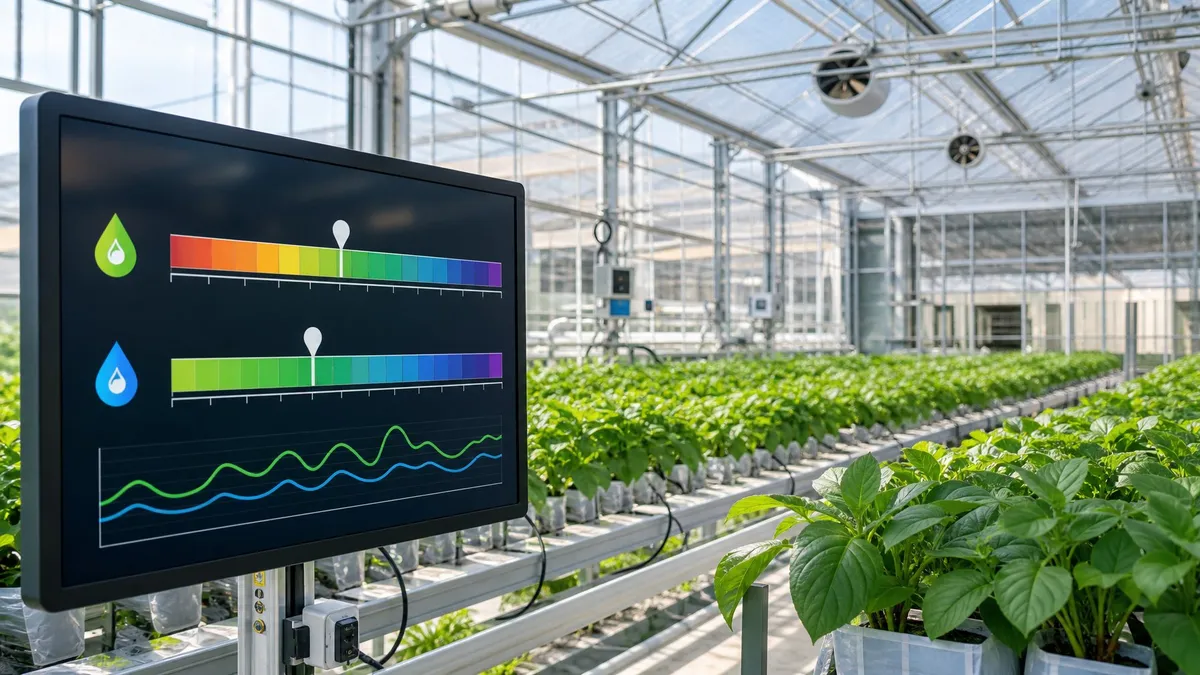
Dialing in your pH and EC is what separates thriving hydroponic crops from a headache of nutrient issues. These two numbers tell you if your plants can actually use the nutrients you’re giving them, and they shift depending on what you grow, the stage your plants are at, and even your water source.
Most hydroponic crops do best with a pH range of 5.5 to 6.5 and an EC between 1.0 and 2.5 mS/cm. But, every crop—and every stage—has its own sweet spot.
A greenhouse pH and EC chart puts those targets right in front of you so you can stop second-guessing and actually grow with confidence. Lettuce and other leafy greens like a lower EC, but tomatoes? They’re hungry, especially when they start fruiting.
Here’s a breakdown of the exact pH and EC ranges for common greenhouse hydroponic crops. I’ll also explain what these numbers mean, how to test and calibrate, and what to do when your readings start to drift.
Key Takeaways
- Most hydroponic greenhouse crops want pH between 5.5 and 6.5. EC targets move around depending on crop and growth stage.
- Calibrate your pH and EC meters regularly—otherwise, your readings are just guesses.
- If your plants look stressed, check pH and EC first. That usually gets you most of the way to a fix.
Quick Reference Crop Ranges
If you just need the numbers, use this table. Remember: these are for the vegetative and fruiting stages of mature plants. Seedlings usually want a much lower EC (0.5 to 1.0).
| Crop Type | Ideal pH Range | Target EC (mS/cm) | | :--------------- | :------------- | :---------------- | | Lettuce | 5.5 – 6.0 | 0.8 – 1.2 | | Spinach | 6.0 – 7.0 | 1.8 – 2.3 | | Tomatoes | 5.5 – 6.5 | 2.0 – 5.0 | | Cucumbers | 5.5 – 6.0 | 1.7 – 2.5 | | Peppers | 5.5 – 6.0 | 0.8 – 1.8 | | Strawberries | 5.5 – 6.5 | 1.0 – 1.4 | | Basil | 5.5 – 6.5 | 1.0 – 1.6 | | Mint | 5.5 – 6.0 | 2.0 – 2.4 |
Understanding pH: The Key to Nutrient Uptake
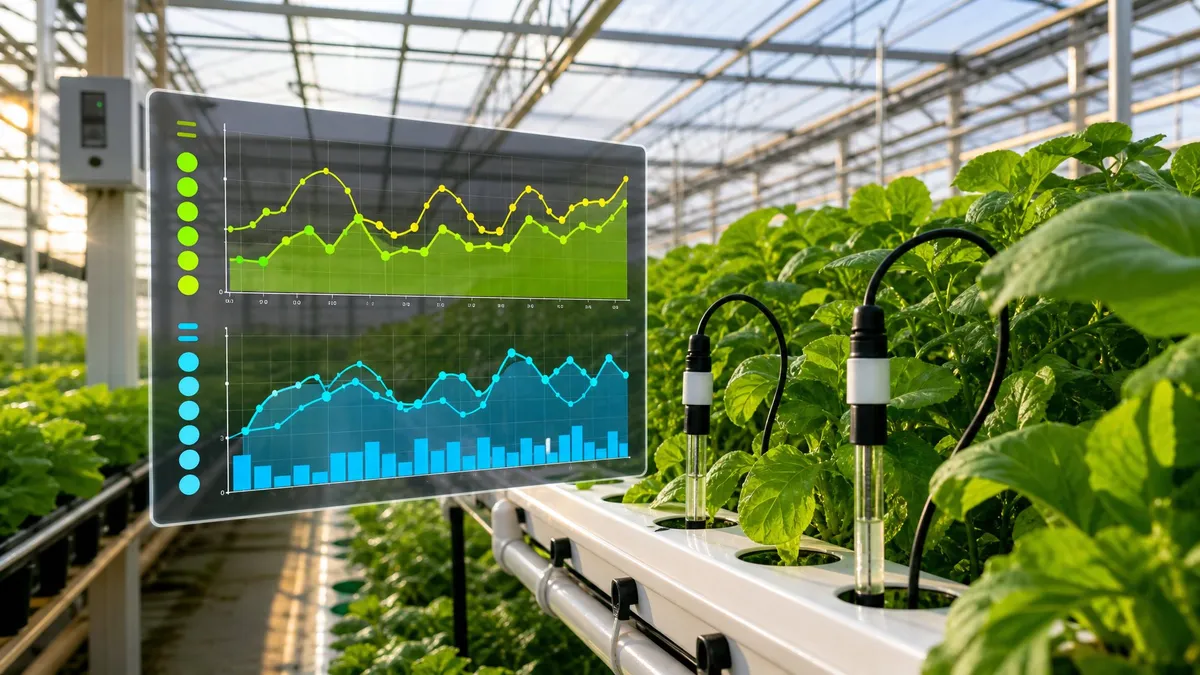
Think of pH as the "gatekeeper" of your nutrient solution. pH (potential Hydrogen) measures how acidic or alkaline your water is on a scale of 0 to 14.
Why pH 5.5 to 6.5 is the Sweet Spot
In hydroponics, nutrients are dissolved in water. If the pH is too high (alkaline) or too low (acidic), certain nutrients "lock out"—meaning they physically can't be absorbed by the plant roots.
For example, iron lock-out usually happens when pH climbs above 6.5. You’ll see your plants turn yellow even if there’s plenty of iron in the water. Keeping the pH between 5.5 and 6.5 ensures that all 13 essential macro and micro-nutrients are available.
How to Adjust pH Safely
When your pH drifts—and it will—you’ll need "pH Up" (usually potassium hydroxide) or "pH Down" (usually phosphoric acid).
- Test first. Make sure your meter is calibrated.
- Add tiny amounts. Use a dropper. A little goes a long way.
- Circulate and wait. Let the solution mix for at least 15–30 minutes before testing again.
Mastering EC: Measuring Nutrient Strength
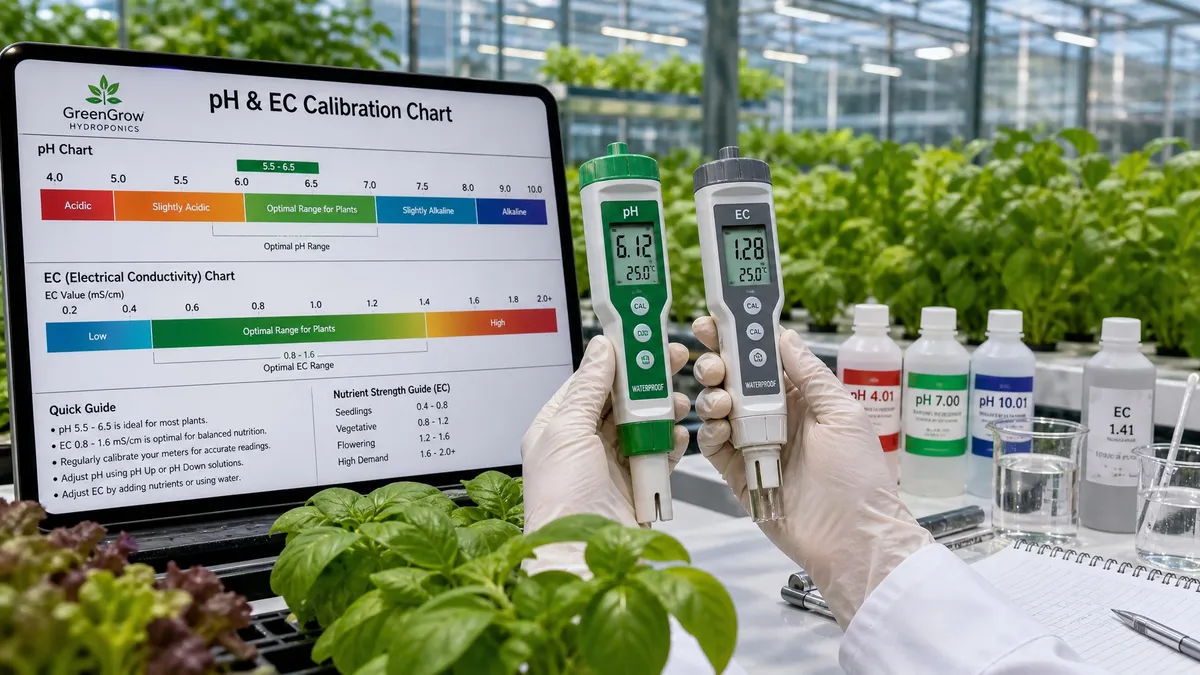
EC stands for Electrical Conductivity. It measures the concentration of salts (nutrients) in your water. Pure water doesn't conduct electricity well, but water full of minerals does.
EC vs. TDS vs. PPM: What’s the Difference?
You might see meters that read in PPM (Parts Per Million) or TDS (Total Dissolved Solids). These are actually just EC readings that the meter has converted using a specific formula.
- The Problem: Different manufacturers use different conversion formulas (the "500 scale" or the "700 scale").
- The Solution: Use EC. It’s the universal scientific standard. 1.0 mS/cm is 1.0 mS/cm regardless of the meter brand.
Signs Your EC is Too High or Too Low
- EC Too High (Burn): The tips of your leaves turn brown and "crispy." This is called nutrient burn. Your plants are taking in more salts than they can handle.
- EC Too Low (Deficiency): Slow growth, pale leaves, and weak stems. Your plants are literally starving.
Testing and Calibration Best Practices
Testing is only useful if your numbers are accurate. Even the most expensive meters drift over time.
How Often Should You Calibrate?
Sierra Greenhouse recommends calibrating your pH meter once a week and your EC meter once a month. pH probes are much more sensitive and "age" faster than EC probes.
The Correct Way to Test Your Reservoir
Always test at the same time of day and at the same temperature. Water temperature significantly affects pH and EC readings. Most modern meters have Automatic Temperature Compensation (ATC), but testing at a steady 65–75°F gives the most reliable results.
Don't just dip your meter into the tank. Take a small cup of solution out, let it stabilize for a minute, and then test.
Troubleshooting Drifting Numbers
It’s normal for pH and EC to change as plants grow. Understanding why they change tells you what your plants are doing.
What it Means When pH Rises and EC Drops
This is the "ideal" scenario. It means your plants are healthy and aggressively eating the nutrients you're providing. You just need to top off with more nutrient solution.
What it Means When pH Drops and EC Rises
This is a warning sign. It usually means:
- Over-feeding: Your plants are drinking more water than nutrients, leaving a concentrated "soup" of salts behind.
- Root Issues: Pathogens or rot are changing the chemistry of the water.
Dealing with Algae and Bacterial Slime
Algae in your reservoir can cause wild pH swings during the day as they undergo photosynthesis. Keep your reservoir completely dark to prevent this.
Tools for Precise Nutrient Management
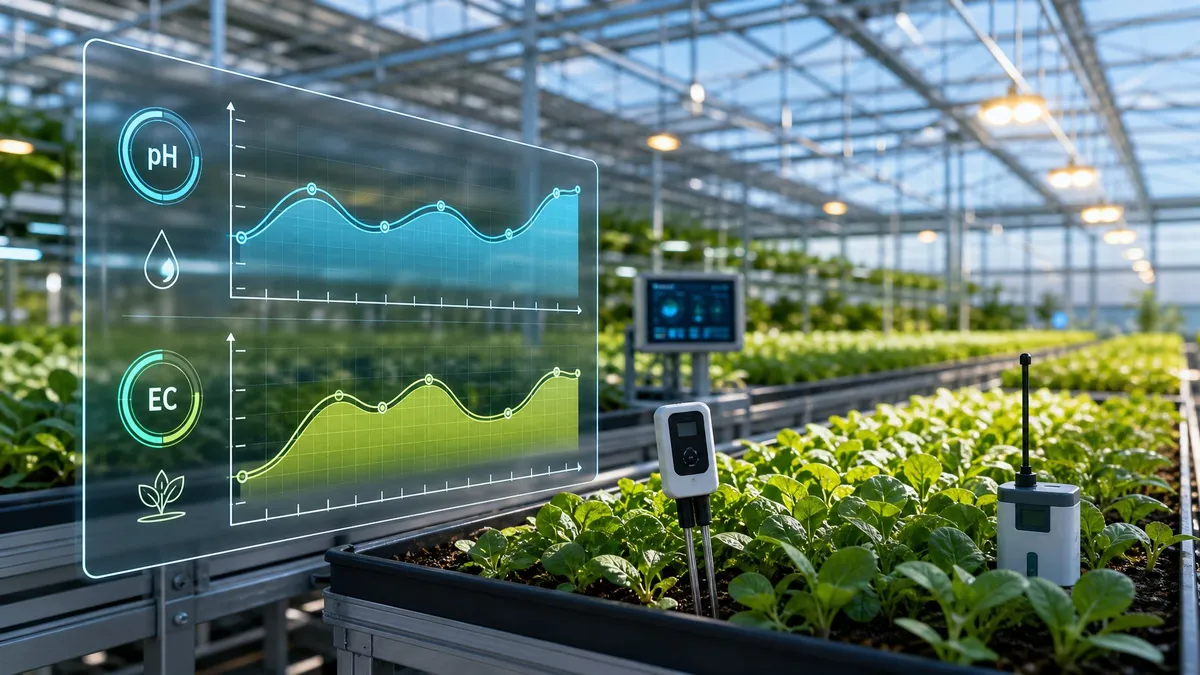
Selecting the Right Meters for Your Budget
- Entry-Level ($15–$30): Good for beginners, but they need frequent calibration and the probes aren't replaceable.
- Mid-Range ($80–$150): Much more reliable, usually waterproof, and have better ATC features.
- Pro-Grade ($300+): Continuous monitors that stay in the tank and can even be linked to greenhouse automation systems to auto-dose nutrients and acids.
The Role of Water Temperature in Accuracy
As water gets warmer, EC naturally rises because ions move faster. Most meters compensate for this, but the "sweet spot" for nutrient absorption is actually 65–68°F. If your reservoir gets above 75°F, your plants will struggle regardless of what the pH chart says.
Frequently Asked Questions
Why does my pH keep rising in my hydroponic system?
In many cases, this is caused by your water source. If you have hard water (high in calcium/magnesium), it has a "buffering capacity" that pushes pH back up. Using RO (Reverse Osmosis) water or a stronger "pH Down" solution is usually necessary.
Can I use a soil pH meter for my greenhouse hydroponics?
No. Soil meters measure the electrical charge in a solid medium, which is a completely different technology. You must use a dedicated liquid pH meter for hydroponic solutions.
What should I do if my EC reading is too high?
The quickest fix is to add pure, pH-balanced water to your reservoir to dilute the concentration. Then, adjust your next batch of nutrients to a lower strength.
Does the growth stage of the plant affect pH and EC targets?
Yes! Seedlings want a low EC (0.5–1.0). Vegetative plants want a medium EC (1.0–2.0). Flowering and fruiting plants want the highest EC (2.0–3.0+) because they are building more complex structures. pH targets stay relatively stable (5.5–6.5) throughout.
How do I measure EC if my meter only shows PPM?
Check which "scale" your meter uses (500 or 700).
- If it's the 500 scale: EC = PPM / 500.
- If it's the 700 scale: EC = PPM / 700. Again, this is why we recommend always using a meter that shows raw EC (mS/cm) to avoid the math!